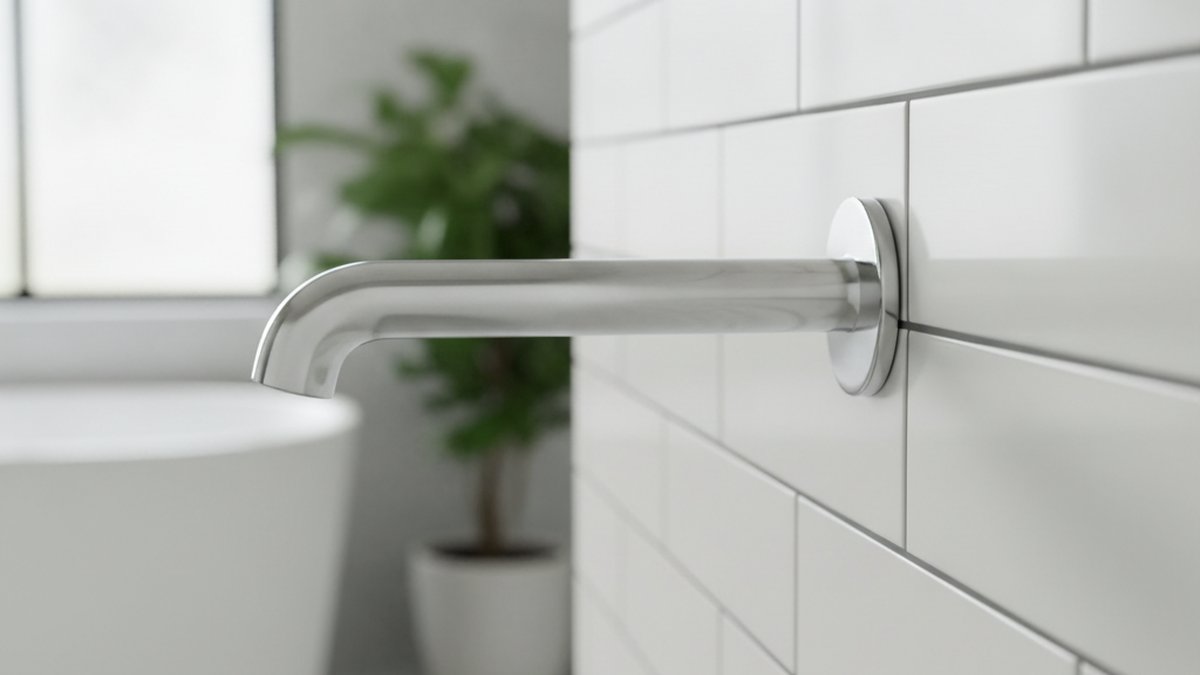
If you’re staring at a leaky or ugly tub spout and wondering about tub spout sizes, here’s the honest truth: “size” actually means three separate measurements that all have to match your rough-in plumbing, and getting any one of them wrong means the new spout won’t seat, won’t seal, or will sit too far off the wall. The good news is that once you know what to measure, buying the right spout takes about five minutes. This guide walks you through every dimension that matters, the two connection standards, and how to measure your own tub in under two minutes with a tape measure.
What Are the Standard Tub Spout Sizes I’ll Actually See in Stores?
The standard tub spout is about 6 inches long with a ½-inch inlet connection, and that single size fits the majority of American bathtubs. Beyond that, spout lengths run from roughly 4 inches (short/stubby) up to 10–11 inches (long/reach spouts), and the inlet is almost always ½ inch — the real difference is how that ½-inch inlet attaches: slip-fit over pipe, or threaded onto a nipple.
Here’s why length varies at all. Some tubs have a thick surround — think stone, thick tile, or a built-out wall — so the water pipe sits deep, and a longer spout is needed to reach past the wall and pour water into the tub instead of dribbling down the tile. A short spout is used when the pipe sits close to the finished wall surface. When people say “tub spout sizes,” they’re usually blending three things together:
- Connection type — slip-on (also called slip-fit) vs. threaded (also called screw-on or IPS).
- Inlet/pipe diameter — almost always ½ inch, but the threaded standard is specifically ½-inch NPT (national pipe thread).
- Overall spout length / reach — how far the spout body extends from the wall, typically 4 to 11 inches.
Nail those three and you have the right spout. Miss one and you’re making a second trip to the hardware store. Let’s break each down.
How Do I Measure My Tub Spout Before Buying a Replacement?
Measure three things: the pipe’s outside diameter, how far the pipe stub sticks out of the finished wall, and the connection style at the pipe. Do those with the old spout off and you’ll know exactly what to buy.
Follow this order — it takes about two minutes:
- Remove the old spout first. Most slip-on spouts have a small setscrew underneath the barrel near the wall — loosen it with a 1/8-inch hex/Allen key and the spout pulls straight off. Threaded spouts unscrew counter-clockwise (grip with a rag or stick a wood dowel inside for leverage).
- Look at what’s behind it. If you see a smooth copper or plastic pipe with a setscrew clamp, you have slip-on. If you see a threaded brass or galvanized nipple, you have threaded.
- Measure the pipe’s outside diameter with a tape or caliper. Roughly ⅞-inch OD means ½-inch copper (slip-on). A threaded nipple that measures about ⅞-inch OD across the threads is ½-inch NPT.
- Measure the stub-out length — how many inches the pipe or nipple protrudes past the finished tile/wall. This tells you whether you need a short, standard, or long spout so it seats flush against the wall.
- Note the old spout’s overall length so your replacement pours into the tub the same way.
One tip most people skip: measure the stub-out and the old spout together. A slip-on spout needs the copper pipe to reach a specific depth inside the spout barrel (usually so the internal setscrew or O-ring seals against it). If your pipe is cut too short, even the “right size” spout won’t grip or seal. If it’s too long, the spout won’t sit flush and you’ll see a gap at the wall.
Slip-On vs. Threaded Tub Spout: Which Connection Type Do I Have?
You have a slip-on spout if the pipe behind it is smooth and the spout was held by a tiny setscrew underneath; you have a threaded spout if it screwed onto a threaded nipple. These two are not interchangeable, so this is the single most important thing to identify before buying.
Many modern spouts are sold as “universal” and include both an adapter for threaded connections and a slip-fit path, but not all — always check the box. Here’s how the two compare side by side.
| Feature | Slip-On (Slip-Fit) | Threaded (Screw-On / IPS) |
|---|---|---|
| Behind the spout | Smooth ½-inch copper or CPVC pipe | Threaded ½-inch NPT brass/galvanized nipple |
| How it attaches | Slides over pipe, locked by setscrew underneath | Screws onto nipple, sealed with thread tape/pipe dope |
| Pipe outside diameter | ~⅞ inch (½-inch nominal copper) | ~⅞ inch across ½-inch NPT threads |
| Tools needed | 1/8-inch hex key, tape measure | Rag/dowel, PTFE tape |
| Common length | 4–7 inches | 5–11 inches (incl. long-reach) |
| Best for | Copper-piped tub/shower valves | Older or nipple-fed installations |
If you buy the wrong connection type, no amount of muscle will make it fit — a threaded spout will not grip smooth copper, and a slip-on spout has no threads to bite a nipple. When in doubt, a true “universal” spout with a rear slip-fit setscrew plus a front adapter covers most homes. If your old spout wobbled or wandered before you removed it, that’s a connection-fit problem worth reading up on separately in our guide on why a tub spout moves side to side.
What Length Tub Spout Do I Need for a Thick Tile or Stone Wall?
For a thick wall, pick a spout whose length exceeds your wall thickness plus stub-out so water clears the tile and drops cleanly into the tub — usually a 7–11 inch “long reach” spout for surrounds thicker than about an inch. For a standard ½-inch tile wall, a 6-inch spout is almost always right.
The physics is simple: the water outlet at the tip of the spout has to sit past the face of the wall by a couple of inches, or water runs back along the underside of the spout and stains your tile and grout. A too-short spout on a deep wall is the #1 cause of that annoying “water crawls back to the wall” problem. Here’s a quick reference:
- Thin/standard wall (½-inch tile or acrylic surround): 4–6 inch spout.
- Medium wall (thick tile, cement board buildup): 6–8 inch spout.
- Thick wall (stone, double-layer tile, built-out framing): 8–11 inch long-reach spout.
For slip-on spouts specifically, length also affects sealing, because the copper pipe has to reach the O-ring or setscrew zone inside the barrel. That’s why plumbers often set the copper stub-out to a spec depth (commonly around 3½–4 inches past the wall for a standard slip spout). If you’re renovating and the pipe is already in, buy the spout to match the pipe — not the other way around.
Are Tub Spouts a Universal or Standard Size in the US?
Mostly yes — the ½-inch inlet is effectively the US standard, so nearly every residential tub spout uses a ½-inch connection. What varies is the connection type (slip vs. threaded) and the length, not the core inlet size. That’s why “will this spout fit my tub?” almost always comes down to matching connection type and reach, not hunting for an exotic diameter.
A few real-world exceptions to know about:
- Diverter vs. non-diverter: A tub-shower combo uses a diverter spout (the little pull-up knob on top that sends water to the showerhead). A tub-only setup uses a plain spout. Both share the same ½-inch sizing standards — you’re choosing function, not a different size class.
- Front-end vs. rear-end connection: Some threaded spouts connect at the very back (rear-end), others deeper inside toward the front (front-end/telescoping). Same ½-inch NPT, different geometry — worth checking against your nipple length.
- Handheld/hose-outlet spouts: A few designer spouts add a handshower outlet underneath; these still use standard ½-inch inlets.
So when a product page says “fits standard ½-inch plumbing,” it’s telling the truth for the inlet — but you still have to confirm slip vs. threaded and the reach for your wall. If your new spout is part of a larger upgrade, it’s worth deciding early whether you actually want a plain spout or a full shower system with a tub spout, since that changes the valve and rough-in behind the wall.
Can the Wrong Tub Spout Size Cause Leaks or Dripping?
Yes — a spout that’s too short, mismatched to the connection type, or not seated deep enough on the pipe will leak at the wall or drip from the tip because the internal seal never seats properly. Sizing and sealing are directly linked, especially on slip-on spouts.
Here’s how size problems turn into water problems:
- Pipe cut too short (slip-on): The copper doesn’t reach the internal O-ring, so water sneaks around the back and leaks behind the wall — a hidden and damaging failure.
- Spout not flush (wrong length): A gap at the wall lets water wick behind the escutcheon area and drip down the tile.
- Threaded spout without tape: Even the right size threaded spout will weep at the joint if you skip PTFE tape or pipe dope on the nipple.
If you’re already fighting drips, the fix might be sealing rather than resizing — our walkthroughs on a tub spout leaking at the wall and a dripping tub spout cover the exact O-rings, tape, and torque involved. And if you’re going deeper into the wall to replace the pipe stub itself so your new spout seats correctly, see our guide on how to replace bathtub faucet pipes without flooding the bathroom.
How Do I Install the Right-Size Tub Spout Once I’ve Bought It?
Installation depends on your connection type: slip-on spouts push onto the pipe and lock with a setscrew, while threaded spouts screw onto a taped nipple until snug and level. Both take about 10 minutes once you have the correctly sized spout in hand.
- Shut off the water to the tub (or the whole house if there’s no local valve) and open the tub faucet to relieve pressure.
- Dry-fit the new spout to confirm it reaches flush against the wall. If it stops short or leaves a gap, you have the wrong length — stop and exchange it now.
- Slip-on: Slide a bead of plumber’s-grade silicone around the wall opening (not a full seal — just the top and sides so water can escape if any gets behind), push the spout on, then tighten the underside setscrew with a 1/8-inch hex key until snug.
- Threaded: Wrap the nipple threads 4–6 times clockwise with PTFE tape, then hand-thread the spout on and tighten until it points straight down and sits flush. Don’t over-torque — you can crack the spout or the fitting.
- Test: Turn the water back on, run the tub, and check for drips at the wall and the tip. Work the diverter a few times if it’s a combo spout.
A clean, correctly sized install also just looks better — the spout sits tight to the wall with no gap and no visible pipe. If you want that finished look at the wall joint, some homeowners pair the spout with a trim ring; our explainer on the square tub spout escutcheon covers when that’s worth it.
Which Tub Spout Should You Buy: Quick Recommendations by Scenario
Match the spout to your situation, not to whatever looks nicest on the shelf. Here’s the short version:
- Replacing a standard combo tub/shower spout on copper pipe: a 6-inch slip-on diverter spout in your existing finish.
- Old home with a threaded brass nipple: a threaded (IPS) spout, or a universal spout that includes a threaded adapter.
- Thick stone or double-tile wall: a 8–11 inch long-reach spout so water clears the wall.
- Tub-only (no shower) freestanding or Roman setup: a deck- or floor-mount tub filler rather than a wall spout — see our review of the Everstein Roman tub faucet for deck-mounted tubs.
Whatever you choose, buy from a line that publishes real specs (inlet type, overall length, reach) rather than vague “fits most” language — that’s how you avoid the return trip.
FAQ
What is the most common tub spout size?
The most common tub spout is about 6 inches long with a ½-inch inlet, in a slip-on configuration for ½-inch copper pipe. This single size fits the majority of American tub/shower combos, which is why “6-inch slip-on” is the safe default when you’re unsure.
Are all tub spouts a ½-inch size?
Nearly all residential tub spouts use a ½-inch inlet — that’s effectively the US standard. What differs is the connection type (slip-on over smooth pipe versus threaded onto a ½-inch NPT nipple) and the overall length, not the inlet diameter itself.
How do I know if my tub spout is slip-on or threaded?
Remove the spout and look at the pipe. A smooth copper or plastic pipe with a small setscrew hole under the spout barrel means slip-on. A threaded brass or galvanized nipple means threaded (screw-on). They are not interchangeable, so identify this before buying.
What length tub spout do I need for a thick tiled wall?
For walls thicker than about an inch — stone, double-layer tile, or built-out framing — choose a 7–11 inch long-reach spout so the water outlet clears the wall and pours into the tub. For a standard ½-inch tile or acrylic surround, a 4–6 inch spout is correct.
Can the wrong tub spout size cause a leak?
Yes. On slip-on spouts, if the copper pipe is cut too short to reach the internal O-ring, water leaks behind the wall. A spout that doesn’t seat flush leaves a gap that lets water wick back to the tile, and a threaded spout installed without PTFE tape will weep at the joint even if the size is right.
Do I need to replace the pipe to fit a new tub spout?
Usually no — most replacements reuse the existing pipe or nipple as long as the connection type and stub-out length match your new spout. You only need to adjust or replace the pipe stub if it’s cut too short to seal a slip-on spout or too long for the spout to sit flush.
A Note on How We Test and Who Wrote This
This guide was written by the Fransiton fixtures team, drawing on hands-on installation of hundreds of wall-mount and deck-mount tub spouts across copper, CPVC, and threaded-nipple rough-ins. Fransiton designs and sells bathroom and kitchen fixtures direct to homeowners at fransiton.net, and every tub spout we ship is pressure-tested and built to standard ½-inch US plumbing dimensions so it drops into a conventional rough-in without adapters where possible. Our metal spouts are backed by a limited manufacturer warranty, and our sizing specs (inlet type, overall length, and reach) are published on every product page so you can measure once and buy right. As always, if your plumbing is unusual or you find corroded pipe behind the wall, bring in a licensed plumber — a $15 spout isn’t worth water damage behind the tile.