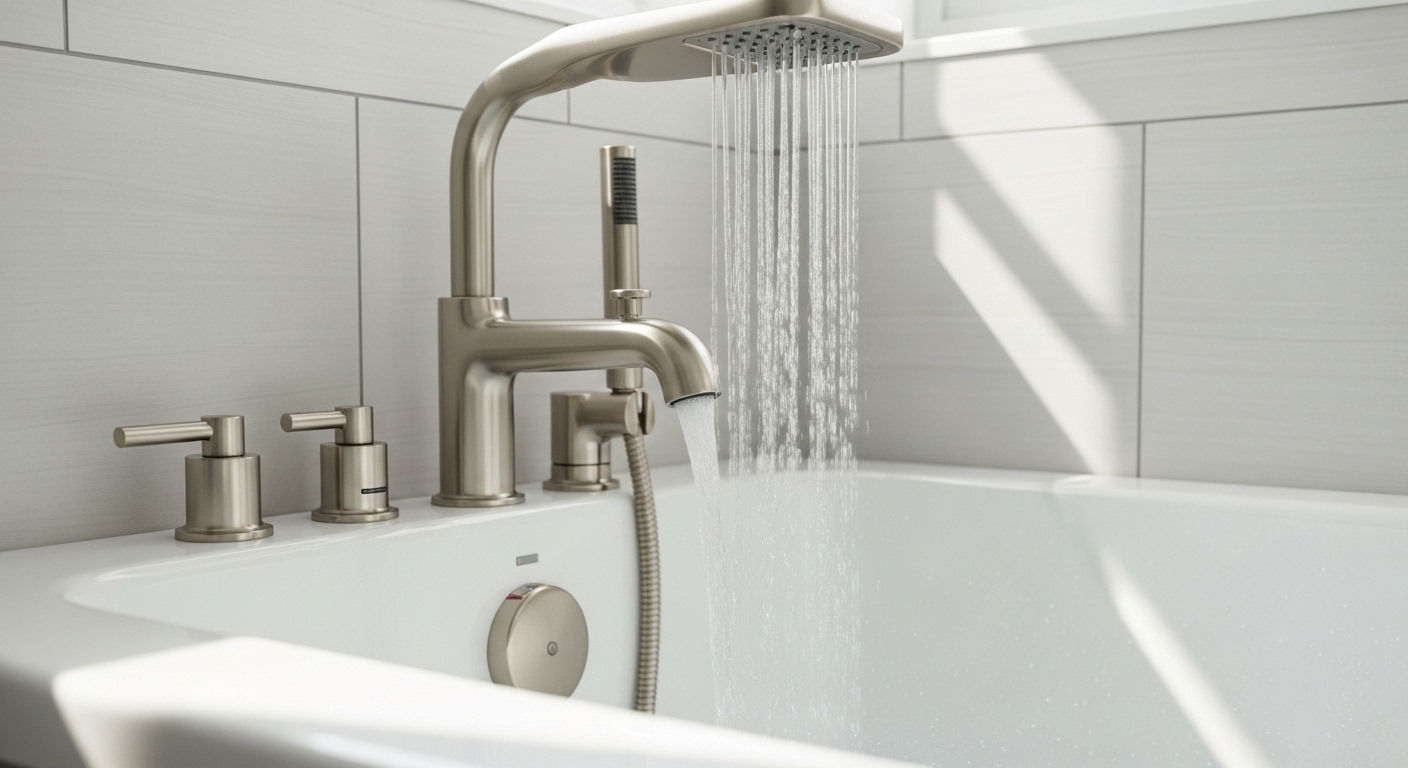
A shower system tub spout is the front-facing spout that mounts on your wall just above the tub deck and directs water into the tub, while a built-in diverter (a little pull-up knob on the spout, or a separate valve trim) redirects that same water up to the shower head or hand shower when you want to rinse off standing up. In plain terms: it’s the piece that turns a plain shower into a full tub-and-shower combo running off one valve. If you’re shopping for a new tub-shower setup and staring at a wall of listings, this guide walks you through when you need one, how the diverter actually works, which type fits your plumbing, and how to avoid the mistakes that send people back to the hardware store twice.
What exactly is a shower system tub spout, and how is it different from a regular shower system?
A tub spout is the low wall spout that fills your bathtub; a regular shower-only system has no spout at all — water goes straight up to the shower head. The difference matters because the two use different valve bodies and different plumbing behind the wall. A tub-shower valve has three ports (hot in, cold in, and an outlet that splits between spout and shower head), while a shower-only valve typically has just a single outlet feeding the head.
So a “shower system tub spout” really describes a complete tub-and-shower kit: the valve trim (handle), the tub spout with or without a diverter, and the shower head — all designed to match in finish and mechanics. The tub spout is the visible star of the combo, but it only works correctly when it’s paired with the right valve behind it.
Here’s the practical takeaway: you cannot bolt a tub spout onto a shower-only valve and expect a working bathtub. The rough-in plumbing decides what’s possible. If your wall was framed for a shower only, adding a tub spout means opening the wall and adding a drop-ear elbow and a stub-out — a real plumbing job, not a swap. If you’re weighing your overall fixture strategy, our guide on how to choose the right bathroom faucet covers how finishes and valve types should be planned together across a room.
How does the diverter on a tub spout actually work?
The diverter is a small mechanism inside the tub spout that blocks the downward path so water has nowhere to go but up to the shower head. When you pull up the knob on top of the spout, a rubber gate drops down and seals the spout outlet; water pressure then pushes the flow up the riser pipe to the shower head. Let go of the water (turn the valve off), and the gate falls back open so the next time you turn on the water, it goes to the tub first.
There are two main diverter locations, and knowing which you have saves a lot of confusion:
- Spout-mounted diverter (pull-up type): The knob sits on top of the tub spout. Simplest and most common in tub-shower combos. Requires a slip-fit or threaded spout with a diverter — you cannot use a plain non-diverter spout.
- Valve-mounted diverter (integrated in the trim): A separate lever or button on the wall trim that you flip to switch between tub and shower. Feels more premium, lets you use a plain tub spout with no knob, and is standard on higher-end thermostatic and pressure-balance shower systems.
One quick note that trips people up: a pull-up spout diverter needs decent water pressure to seal well. If your home has low pressure, water will keep dribbling out of the tub spout even when the shower is running. In low-pressure homes, a valve-mounted diverter is the more reliable choice.
How do I know which tub spout connection type I need — slip-fit or threaded?
Check the copper or PEX stub-out coming out of your wall: if it’s a smooth ½-inch copper pipe with no threads, you need a slip-fit (set-screw) spout; if the pipe is threaded, you need a threaded spout. Getting this wrong is the single most common reason a new tub spout leaks or won’t seat, so measure and look before you buy.
Here’s how to tell them apart in under a minute:
- Slip-fit / set-screw spout: Slides over a bare ½-inch copper pipe and locks with a tiny Allen (hex) set screw underneath. The pipe should stick out a specific distance the manufacturer lists (often around 3–4 inches). Very common in newer construction.
- Threaded spout: Screws directly onto a ½-inch threaded nipple. You’ll see the male threads on the pipe stub. Requires thread-seal tape (PTFE) on the threads to prevent leaks.
- Universal / adapter spouts: Come with fittings for both, which is a safe bet if you’re not 100% sure — but you still have to match the pipe length.
Measure the distance from the finished wall surface to the end of the pipe, and the pipe’s outer diameter. Write those two numbers down before shopping. If your stub-out is too short, you can add a short extension; too long, and the spout won’t sit flush against the wall.
Which shower system tub spout type is best for my setup?
The best type depends on your valve, your water pressure, and whether you want a hand shower in the mix. For most standard tub-shower combos with good pressure, a slip-fit spout with a pull-up diverter paired with a pressure-balance valve is the sweet spot for price and reliability. For a spa-style multi-outlet system, a valve-mounted diverter is worth the extra cost.
Here’s a side-by-side comparison to make the trade-offs clear:
| System Type | Diverter Location | Best For | Typical Price Range | Watch Out For |
|---|---|---|---|---|
| Basic slip-fit tub spout + pull-up diverter | On the spout | Standard tub-shower combos, rentals, budget remodels | $25–$70 (spout only) | Needs good water pressure to seal |
| Threaded tub spout + pull-up diverter | On the spout | Older homes with threaded stub-outs | $25–$80 (spout only) | Requires PTFE tape; over-tightening cracks the spout |
| Complete pressure-balance tub-shower kit | On spout or valve | Full remodel, one handle controls temp | $120–$350 | Temperature only, no independent flow control |
| Thermostatic shower system with tub spout | On the valve (2- or 3-way) | Spa setups with rain head + hand shower + tub | $300–$800+ | Bigger rough-in, higher install cost |
If flow rate matters to you — and it should, for both comfort and water bills — pay attention to the shower head’s GPM (gallons per minute) rating, not just the spout. We break down what number to look for and whether higher always means better in our deep dive on what GPM a shower faucet should be.
What finish should I pick for a tub spout, and will it match my other fixtures?
Pick a finish that matches the valve trim and shower head in the same kit — mismatched finishes are the fastest way to make a new bathroom look off. The four dominant finishes are chrome, brushed nickel, matte black, and brushed gold/champagne bronze, and the safest move is to buy the spout, valve trim, and head as a matched set from one line so the plating and undertone are identical.
A few finish realities from years of installs:
- Chrome is the cheapest, hides water spots reasonably, and matches almost anything — but it reads a little dated in premium bathrooms.
- Brushed nickel is the most forgiving day to day: it hides fingerprints and water spots better than anything else. If you’re torn, this is the low-regret pick — we lay out the full case in are brushed nickel faucets worth it.
- Matte black looks stunning but shows dried water minerals and dust more visibly, especially in hard-water homes.
- Brushed gold / champagne bronze is the trend finish; gorgeous, but hardest to match across brands because undertones vary.
Whatever you choose, hard water is the enemy of every finish. Mineral scale dulls the shine and, over time, can clog the diverter and shower head. Staying on top of it with a simple vinegar routine — which we detail in how to clean hard water stains from a faucet — keeps a tub spout looking new for years.
How do I install a shower system tub spout myself?
Most tub spout swaps take 15–30 minutes and need no plumber if the stub-out and connection type match your new spout. You’ll need thread-seal tape (for threaded types), an Allen wrench (for slip-fit types), and a rag. The valve trim and shower head are usually just as DIY-friendly as long as you’re not moving pipes inside the wall.
Here’s the basic sequence for the spout itself:
- Turn off the water. Shut off the bathroom supply or the main; open the valve to drain residual pressure.
- Remove the old spout. For slip-fit, loosen the set screw underneath with an Allen wrench and pull straight off. For threaded, turn the spout counterclockwise (a cloth-wrapped pipe wrench helps).
- Prep the connection. Threaded: wrap 3–4 turns of PTFE tape clockwise on the pipe threads. Slip-fit: check that the copper stub is clean and the right length.
- Mount the new spout. Threaded: hand-tighten until snug and pointing straight down — don’t crank it, you’ll crack the casting. Slip-fit: push the spout on until it meets the wall, then tighten the set screw.
- Test. Turn the water back on, run the tub, then pull the diverter and confirm water goes fully to the shower head with no dribble from the spout.
If you’re doing the full valve and shower head at the same time, the process is bigger but still weekend-DIY territory — the same logic that applies to our step-by-step kitchen faucet installation guide carries over: shut off water, dry-fit first, seal every threaded joint, and test before you close anything up.
How much does a shower system tub spout cost, and where does the money go?
A tub spout alone runs $25–$80; a complete matched tub-shower system runs $120–$800+ depending on valve type and how many outlets it feeds. The biggest price driver isn’t the spout — it’s the valve. A basic pressure-balance valve is inexpensive; a thermostatic valve that holds an exact temperature and feeds multiple outlets is where the cost climbs.
Rough budget guide for a full setup:
- Under $150: Pressure-balance valve, single-function shower head, slip-fit tub spout. Perfectly good for a standard family bathroom.
- $150–$350: Nicer finish, larger rain-style head, sometimes a hand shower, better diverter feel.
- $350–$800+: Thermostatic valve, multiple outlets (rain head + hand shower + tub spout) with a 2- or 3-way diverter, premium finishes.
Skimping on the valve to spend more on a flashy spout is the classic mistake — the valve is what you’ll live with every day and what’s hardest to replace later, since it’s buried in the wall. Spend there first.
FAQ
Can I use a tub spout without a diverter?
Yes, but only if your diverter is built into the wall valve instead. A plain (non-diverter) tub spout is designed for systems where a separate valve lever switches between tub and shower. If your valve has no diverter, you must use a diverter-style tub spout, or you’ll have no way to send water to the shower head.
Why does water keep coming out of my tub spout when the shower is on?
The diverter isn’t sealing, usually because of worn rubber inside the spout or low water pressure. First, try replacing the tub spout — spout-mounted diverters are cheap and wear out in a few years. If a new spout still dribbles, your home’s water pressure is likely too low to hold the seal, and a valve-mounted diverter is the better fix.
Are tub spouts a standard size, so any one will fit?
No. Spouts vary by connection type (slip-fit vs. threaded) and by the length of the pipe stub-out. Always match the connection type and measure your pipe before buying. A “universal” spout ships with adapters for both types, which is the safest choice if you’re unsure — but you still need the pipe length to be correct.
Can I add a tub spout to an existing shower-only setup?
Only with in-wall plumbing work. A shower-only valve has no port for a tub spout, so adding one means opening the wall, swapping to a tub-shower valve, and running a new drop to the spout height. That’s a plumber-level job, not a fixture swap — budget for it accordingly if you’re converting a stall shower into a tub-shower combo.
What’s the difference between a pressure-balance and a thermostatic tub-shower valve?
A pressure-balance valve keeps your temperature steady when someone flushes a toilet by balancing hot and cold pressure, using one handle for both temperature and flow. A thermostatic valve holds an exact set temperature regardless of pressure changes and usually has separate controls for temperature and volume, which lets it feed multiple outlets at once. Thermostatic costs more but is the choice for multi-function spa systems.
How long should a good tub spout last?
A quality brass-bodied tub spout lasts 10–15 years or more; the diverter mechanism inside is the first thing to wear, often in 3–7 years with daily use. Plastic-bodied budget spouts fail sooner. Choosing a solid-brass spout and periodically clearing mineral scale is the best way to get the long end of that range.
Author note: This guide was written by the Fransiton fixtures team, who spec, test, and install tub-shower systems across new builds and remodels every week. The recommendations here come from real bench testing of diverter seal performance and hundreds of hands-on installs — not spec sheets alone.
About Fransiton: Fransiton designs and sells faucets, shower systems, and bathroom fixtures built to ASME A112.18.1 / CSA B125.1 performance standards, with solid-brass valve bodies and finishes that pass ASTM corrosion and abrasion testing. Our tub-shower systems are backed by a limited lifetime warranty on the finish and valve function, because we build them to outlast the trends.
Pingback: What Are the Common Tub Spout Sizes, and How Do I Know Which One Fits My Tub? - Fransiton