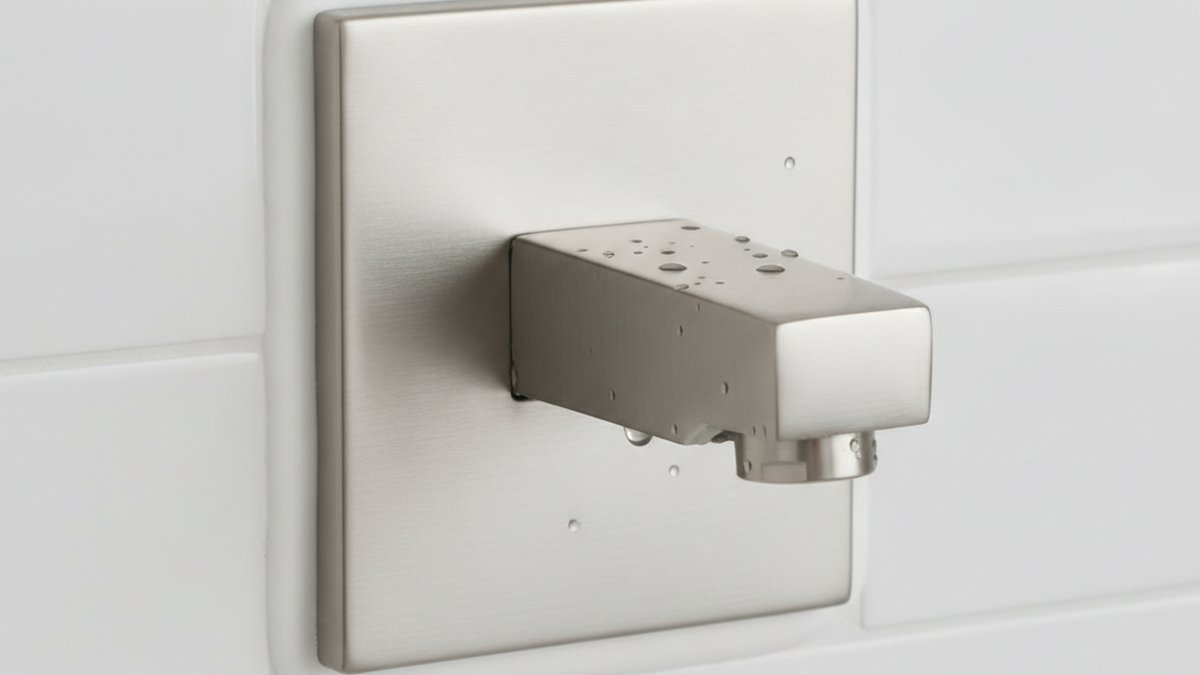
If you’ve been searching for a tub spout escutcheon square, you’re almost certainly staring at a rough hole in the tile around your bathtub pipe — and you want to cover it cleanly with something that looks intentional instead of like a plumber’s afterthought. The short version: a square escutcheon is a flat decorative plate that slips over the water supply pipe and presses flat against the wall, so the drop-ell, the caulk, and any chipped tile disappear behind a crisp square frame. This guide explains exactly what it does, how to know your size, how it differs from a round one, and how to install it without a leak.
What does a tub spout escutcheon actually do?
An escutcheon does three jobs at once: it hides the hole where the pipe comes through the wall, it gives the caulk a clean edge to seal against, and it makes the whole spout look finished. Without it, you’d see the raw pipe stub, the gap around it, and whatever the tile setter did (or didn’t do) to cut a neat opening.
Here’s the thing most people don’t realize: not every tub spout needs a separate escutcheon. Many slip-on and threaded spouts have a built-in flange — a lip at the back of the spout that already covers the wall opening. You only need a standalone escutcheon square when:
- Your spout has no built-in flange, or a shallow one that doesn’t cover the hole.
- Your wall opening was cut too big, or the tile around it is chipped or uneven.
- You’re switching from a round trim to a square design and the old round plate left an unpainted or unglazed ring on the wall.
- You want the spout, handle trim, and shower arm flange to all match in a square profile.
A square escutcheon is purely the geometric variant of the same part. The function is identical to a round one — it’s a style and coverage decision. If your tile has a square grid or your shower valve trim is square, matching the spout plate pulls the whole wall together visually.
How do I know what size square escutcheon I need?
Measure two things: the size of the wall opening you need to cover, and the diameter of the pipe or spout nipple passing through it. Most square tub spout escutcheons run 3 to 5 inches per side, with a center hole sized for either a 1/2-inch or 3/4-inch pipe (nominal), which is roughly a 7/8″ to 1-1/8″ actual opening.
The plate has to be big enough to hide the hole with margin on every side. If your drilled or chipped opening is 2 inches across, a 3-inch square plate barely covers it and leaves no room for error — go up to a 4- or 5-inch plate so you have coverage even if the plate shifts slightly during install. Measure the widest point of the damage or gap, not the pipe.
| Spec | What to check | Typical value |
|---|---|---|
| Plate size (per side) | Must exceed wall hole + margin | 3″ – 5″ |
| Center hole ID | Fits over pipe/nipple | 7/8″ – 1-1/8″ |
| Pipe compatibility | Nominal supply size | 1/2″ or 3/4″ |
| Depth/thickness | Sits flush without gap | 1/4″ – 1/2″ |
| Mount type | Slip-on, set screw, or foam-backed | Varies by model |
One practical tip: if you’re keeping your existing spout, take the spout off first and photograph the pipe. A threaded (screw-on) spout uses a 1/2-inch threaded nipple; a slip-on spout clamps onto 1/2-inch copper with a set screw underneath. The escutcheon has to slide over whichever one you have, so knowing your connection type before you buy saves a return trip.
Square vs. round tub spout escutcheon — which looks better?
Neither is objectively “better” — pick the shape that matches the rest of your trim. Square escutcheons read modern and architectural and pair naturally with square spouts, rectangular shower heads, and square valve trim. Round escutcheons are the traditional default and blend into almost any bathroom without drawing attention.
The mistake to avoid is mixing geometry on the same wall. A square spout with a round escutcheon and a round shower flange looks accidental. If you’re committing to the square look, carry it across the spout plate, the shower arm flange, and ideally the valve trim. Here’s how the two compare in practice:
| Square escutcheon | Round escutcheon | |
|---|---|---|
| Style | Modern, architectural | Classic, universal |
| Best paired with | Square spouts & trim, grid tile | Any spout, most bathrooms |
| Coverage of odd holes | Excellent — corners add area | Good, but round gap harder to hide |
| Availability | Fewer options, growing fast | Widest selection |
| Caulk line | Straight edges, easy clean lines | Curved bead |
A quiet advantage of the square plate: because the corners extend farther out than a circle of the same width, a square escutcheon actually covers a slightly larger footprint, which helps when your wall opening is off-center or ragged. If you’re covering a repair, square often hides more.
How do I install a square tub spout escutcheon without leaks?
Install it dry-fit first, then seal the top and sides — but leave the bottom edge open so any water that gets behind the wall can drain out. This is the single most important rule and the one most DIYers get wrong. Here’s the full sequence:
- Shut off the water to the tub if you’re removing the spout, or at least confirm the diverter is closed.
- Remove the old spout. Slip-on types have a set screw on the underside (usually a hex/Allen key). Threaded types unscrew counterclockwise — a cloth-wrapped pipe wrench inside the spout opening gives leverage without scratching.
- Clean the wall. Scrape off old caulk, silicone, and any crumbling grout around the opening so the escutcheon sits flat.
- Slide the square escutcheon over the pipe and dry-fit it flush against the wall. Check that it’s level — a square plate shows even a 1-degree tilt instantly, so use a small level or eyeball it against a tile grout line.
- Reinstall the spout. For threaded spouts, wrap the nipple threads with PTFE (plumber’s) tape 3–4 wraps clockwise, then hand-tighten the spout until it points straight down and snugs the escutcheon against the wall. For slip-on spouts, tighten the set screw.
- Caulk the top and both sides of the escutcheon with 100% silicone. Leave the bottom edge unsealed so any moisture behind the wall can escape and evaporate instead of rotting the wall.
If, when you pull the old spout, you notice the pipe itself wobbles or the spout rocks, the escutcheon won’t fix that — you have a loose or improperly anchored drop-ell behind the wall. That’s a separate repair, and we cover the symptoms in our guide on why a tub spout that moves side to side needs attention before you trim it out. Similarly, if water is showing up behind the plate, an escutcheon alone won’t stop it — read our walkthrough on fixing a tub spout leaking at the wall first, because trim over an active leak just hides a growing problem.
Can a square escutcheon fix a spout that leaks or drips?
No — an escutcheon is trim, not a seal for pressurized water. It covers the wall opening cosmetically and keeps shower splash out of the wall cavity, but it does nothing about water leaking from the spout itself or dripping from the tip. Those are valve, diverter, or thread-seal problems.
People conflate these all the time because the symptoms show up in the same spot. Let’s separate them clearly:
- Water seeping around the base where the spout meets the wall → usually a failed thread seal or cracked drop-ell; an escutcheon hides the hole but a fresh PTFE-taped connection stops the seep. See tub spout leaking at the wall.
- Constant drip from the spout tip → worn valve cartridge or washer upstream. Our guide on tub spout dripping walks through the fix.
- Water won’t fully divert to the shower → a bad diverter inside the spout; you replace the whole spout, not the escutcheon.
So buy the square escutcheon for looks and coverage. If you also have a leak, fix the plumbing first, then trim it out. Doing it in that order means you won’t be prying off fresh caulk a week later.
Do I need to replace the whole spout to switch to a square escutcheon?
Not necessarily — but you’ll get the cleanest result if the spout and escutcheon are designed to work together. Some spouts have their own integrated flange and simply aren’t meant to take a separate plate; forcing one on leaves a lip or gap. If you want a true square escutcheon look, the safest path is to buy a flangeless spout (or one with a flat back) plus a matching square plate, so they seat flush.
If you’re already redoing the spout, this is also the moment to think about your whole tub-and-shower trim as a set. A coordinated shower system with a tub spout gives you a matched spout, escutcheon, handle, and shower head in one finish and geometry — which is far easier than chasing individual square parts that almost-but-don’t-quite match. And if this project is turning into a bigger job because the pipe behind the wall is corroded, our guide on how to replace bathtub faucet pipes without flooding the bathroom covers the deeper repair.
What finishes and materials should I look for?
Match the escutcheon finish to your spout and shower trim exactly, and prioritize solid brass or stainless construction over thin stamped plate for longevity in a wet zone. Finish names aren’t standardized across brands, so a “brushed nickel” from one maker won’t perfectly match another’s — buy your spout, escutcheon, and shower flange in the same finish, from the same line, whenever you can.
Common finishes and how they behave in a splash zone:
- Chrome — brightest, cheapest, easiest to clean; shows water spots.
- Brushed/satin nickel — warm silver, hides spots and fingerprints well; the most forgiving daily-use finish.
- Matte black — bold and modern, pairs beautifully with square trim; shows hard-water film and lime, so wipe it dry.
- Brushed gold / champagne bronze — on-trend warm tone; make sure every piece is the same line so undertones match.
On material: a foam or rubber gasket behind the plate helps it seal flat against slightly uneven tile, and a set-screw or spring-clip mount holds a heavier metal plate securely. Avoid ultra-thin plated plastic in a tub surround — constant humidity and cleaning will dull it within a couple of years.
Author note & why you can trust this guide
This guide was written by the Fransiton fixtures team — we design and sell tub spouts, shower systems, escutcheons, and bathroom trim, and we field these exact sizing and leak questions from customers every week. Fransiton fixtures are built from solid brass and stainless components, tested to standard water-supply pressures, and backed by a limited warranty on finish and function. When we recommend leaving the bottom edge of an escutcheon uncaulked or matching finishes within a single trim line, it’s because we’ve seen what happens in real bathrooms when people don’t. Our advice here follows common plumbing-trim practice and manufacturer install standards for wet-wall fixtures — the same guidance our own products ship with.
FAQ
What size is a standard square tub spout escutcheon?
Most square tub spout escutcheons measure 3 to 5 inches per side, with a center hole sized for 1/2-inch or 3/4-inch supply pipe. Measure your wall opening at its widest point and choose a plate that overlaps it by at least half an inch on every side.
Can I use a square escutcheon with a round tub spout?
Technically yes, if the spout’s back is flat or flangeless, but it usually looks mismatched. For the cleanest result, pair a square escutcheon with a square (or flat-backed) spout and carry the square shape through to your shower arm flange and valve trim.
Do I caulk all the way around a tub spout escutcheon?
No. Seal the top and both sides with 100% silicone, but leave the bottom edge open. That gap lets any water that gets behind the wall drain out and evaporate instead of being trapped, where it could rot the wall or breed mold.
Will a square escutcheon stop my tub spout from leaking?
No. An escutcheon is decorative trim that covers the wall hole — it does not seal pressurized water. If your spout leaks at the wall or drips from the tip, fix the thread seal, drop-ell, or valve cartridge first, then install the escutcheon over the repaired connection.
Do all tub spouts need a separate escutcheon?
No. Many spouts have a built-in flange that already covers the wall opening. You only need a separate square escutcheon if your spout is flangeless, your wall hole is too large or damaged, or you’re switching to a square look that your existing spout’s round flange can’t provide.
How do I remove an old escutcheon before installing a square one?
Cut the caulk line around the plate with a utility knife, then remove the spout (set screw underneath for slip-on, or unscrew counterclockwise for threaded). Once the spout is off, the old escutcheon slides straight off the pipe. Scrape the wall clean before fitting the new square plate.