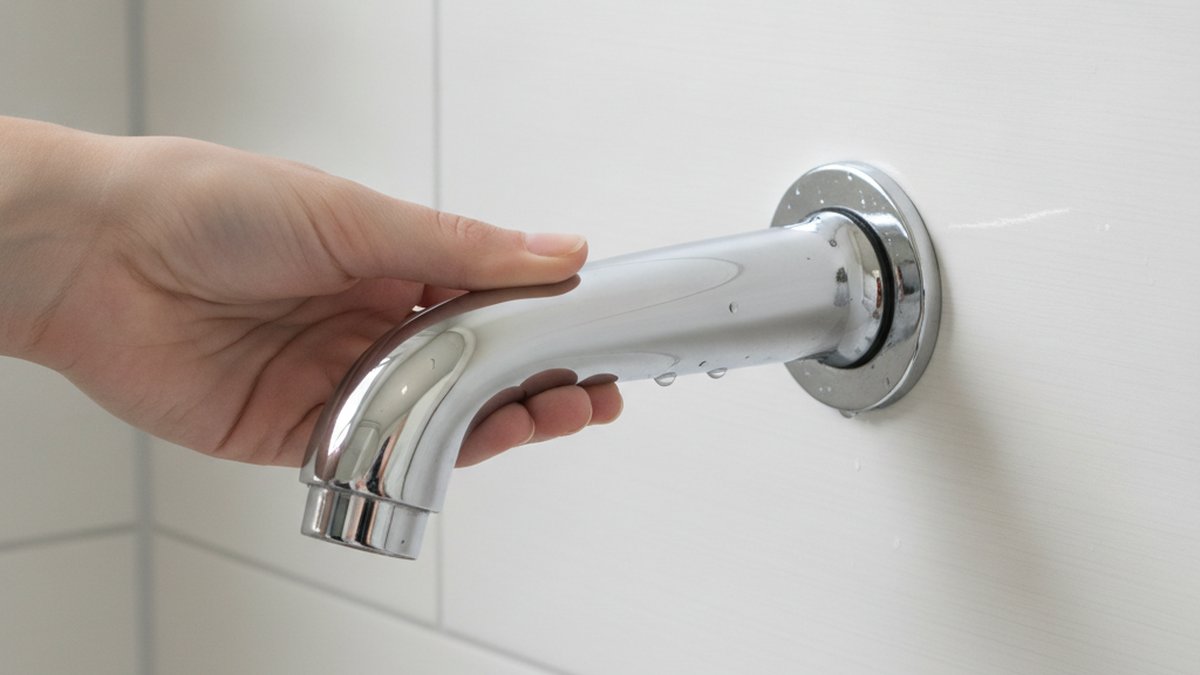
If your tub spout moves side to side when you grab it, don’t panic — this is one of the most common and least serious bathtub complaints we see, and 9 times out of 10 you can fix it yourself before dinner. A spout is only held on in one of two ways: a small setscrew that clamps it onto a copper “slip-fit” stub, or threads that screw onto a nipple pipe. When it wiggles, one of those connections has loosened. The real question isn’t whether you can fix it — you can — it’s which type you have and whether the movement is just annoying or a sign of a leak brewing behind the tile.
Below I’ll walk you through exactly how to tell what’s going on, how to tighten it correctly (there’s a right and a wrong way), when a wobble is actually a warning sign, and what to buy if the spout itself is worn out. This is the same diagnostic order a plumber uses on a service call.
Why does my tub spout move side to side in the first place?
Your tub spout moves side to side because the fastening that locks it to the water pipe has come loose — either a setscrew has backed out on a slip-fit spout, or the threaded connection has loosened and its sealant has failed. Movement isn’t the spout “breaking”; it’s the spout no longer being clamped tight to the pipe.
There are really only two spout mounting styles in North American tubs, and knowing yours is the whole game:
- Slip-fit (setscrew) spout: Slides over a smooth 1/2″ copper stub-out and is locked with a tiny Allen/hex setscrew on the underside of the spout near the wall. When that screw loosens, the spout rotates and rocks freely. This is the most common cause of side-to-side movement.
- Threaded (screw-on) spout: Threads onto a galvanized or brass pipe nipple sticking out of the wall. When it loosens, the sealant (plumber’s tape or pipe dope) has dried out or the spout has partially unscrewed, so it turns and wiggles.
Reach under the spout right at the wall. If you feel a small hole or a recessed hex screw, you have a slip-fit spout. If it’s smooth underneath, it’s threaded. That one check decides which fix you use.
Is it dangerous if the tub spout is loose and wobbly?
A loose tub spout usually isn’t dangerous on its own, but if you ignore it, the movement can crack the sealant or the pipe connection and start a leak inside the wall — and hidden leaks are what cause the expensive damage. So: not an emergency, but not something to leave for a year either.
Here’s the risk ladder, from harmless to “call someone”:
- Just annoying: The spout rocks a little but water only comes out the front, the wall is dry, and it re-tightens easily. Fix it and move on.
- Worth watching: The spout moves and you see water weeping where it meets the wall, or water dribbles from the base when the shower is running. That points to a failing seal or diverter — often the same root cause behind a tub spout leaking at the wall.
- Stop and inspect: The spout moves a lot, feels “spongy,” or you hear a crunch. The copper stub or threaded nipple behind the tile may be cracked or the wall backing may be rotted. Forcing a wobbly spout can snap a corroded pipe, and now you’ve got a repair inside the wall.
The golden rule: a spout should never be your handhold. People grab the spout to steady themselves getting in and out of the tub, and that side-load is exactly what loosens and eventually cracks the connection. If someone in the house needs a grab point, install a real grab bar — don’t let the spout become one.
How do I fix a slip-fit tub spout that moves side to side?
To fix a slip-fit spout that moves side to side, find the setscrew on the underside near the wall, tighten it with the correct hex key until the spout is snug and level — that’s it in most cases. If tightening doesn’t hold, the spout has an internal O-ring or a stripped screw and needs a quick refresh.
Step by step:
- Look underneath the spout at the wall end. You’ll see a small recessed hole with a hex (Allen) setscrew inside it. It’s usually a 1/8″ or 3/32″ hex, sometimes a Phillips on older units.
- Insert the correct hex key and turn clockwise. Snug it firmly, but don’t gorilla it — over-tightening can crush the setscrew boss or dent the copper stub. Snug is enough to stop the wobble.
- Check the spout sits level and flush to the wall. The back of the spout should almost kiss the tile with only a hair of gap for sealant.
- If it still moves after tightening, pull the spout off (loosen the setscrew fully, slide it straight off the copper) and inspect the internal O-ring or plastic bushing. A worn O-ring lets the spout rock even with the screw tight. A dab of silicone plumber’s grease on a new O-ring restores a tight, quiet fit.
- Seal the back. Before sliding it back on, run a thin bead of 100% silicone caulk around the base where it meets the tile — this keeps splash water from getting behind the spout, not to hold the spout on.
That’s the whole repair. Total time is usually under 15 minutes, and the only tool you truly need is the right hex key.
How do I fix a threaded tub spout that keeps loosening?
To fix a threaded (screw-on) spout, unscrew it completely counterclockwise, clean the old sealant off the wall nipple, wrap the threads with 4–6 turns of PTFE (Teflon) plumber’s tape plus a smear of pipe dope, then screw the spout back on hand-tight and finish it pointing straight down. Fresh sealant is what stops the wobble and future drips.
A few things that separate a clean job from a leaky one:
- Wrap the tape the right direction. Wind PTFE tape clockwise (as you look at the open end of the pipe) so it tightens rather than unravels as the spout goes on.
- Stop when the spout points down. You want it snug and aimed straight at the drain. If it ends up pointing sideways when tight, back it off a hair or add one more wrap of tape — never crank it past the drips-into-the-tub position just to remove a wobble.
- Don’t over-torque a galvanized nipple. Old galvanized pipe gets brittle. If the nipple feels weak or looks rusty, replacing that short pipe is cheap insurance — the same principle applies when people replace bathtub faucet pipes during a bigger repair.
If your threaded spout is a diverter type (the pull-up knob that sends water to the shower) and it wobbles and the shower loses pressure, the internal diverter is likely worn — at that point replacing the whole spout is faster and cheaper than fussing with it, since diverters aren’t serviceable on most spouts.
Slip-fit vs. threaded tub spout: which do I have, and what does the fix need?
Use the table below to match your spout type to the exact cause of the side-to-side movement and the fix. If you’re not sure, the underside test (hole = slip-fit, smooth = threaded) settles it in two seconds.
| Feature | Slip-fit (setscrew) spout | Threaded (screw-on) spout |
|---|---|---|
| How it mounts | Slides onto smooth 1/2″ copper stub | Screws onto a pipe nipple |
| Tell-tale sign | Hex setscrew hole on the underside | Smooth underside, no screw |
| Most common cause of wobble | Loose/backed-out setscrew or worn O-ring | Dried-out tape/pipe dope, partly unscrewed |
| Tool needed | Hex (Allen) key, 3/32″–1/8″ | Strap or pipe wrench, PTFE tape, pipe dope |
| Typical fix time | 10–15 minutes | 15–20 minutes |
| Replace instead if… | Setscrew boss stripped, O-ring seat worn | Diverter failed or nipple corroded |
When should I just replace the tub spout instead of tightening it?
Replace the spout rather than tightening it when the setscrew is stripped, the internal diverter no longer holds shower pressure, the finish is pitted or peeling, or you tighten it and it works loose again within days. A new spout costs less than a service call and installs in the same 15 minutes.
Signs it’s time for a new spout:
- The setscrew spins freely and won’t bite — the threads inside are stripped.
- You pull the diverter knob and the shower still dribbles from the tub spout, meaning water is bypassing the seal.
- The chrome or brushed finish is flaking, which also tells you the underlying metal is corroding.
- It loosens repeatedly no matter how carefully you seal it — the mounting seat inside the spout is worn out.
When you shop for a replacement, match the spout to your rough-in first. Measure whether you have a slip-fit stub or a threaded nipple, and if you’re upgrading the whole shower experience, this is a natural moment to decide whether you want a plain spout or a full shower system with a tub spout and matching valve. And if the reason you’re back here is a persistent drip rather than a wobble, our guide on why a tub spout keeps dripping covers the cartridge and diverter side of things in depth.
What kind of tub spout should I buy for a Fransiton bathtub setup?
For most tubs, buy a slip-fit spout if you have a smooth copper stub-out and a threaded spout if you have a pipe nipple — then choose diverter vs. non-diverter based on whether you also have a shower head. Match the finish to your existing trim so the whole tub reads as one set.
Quick buying checklist:
- Mount type: Slip-fit or threaded — measure before you buy, this is the #1 return reason.
- Diverter or not: Get a diverter spout only if you have a tub-and-shower combo. A tub-only setup uses a plain front-discharge spout.
- Length: Spout length affects how far water clears the tub edge. Too short and water runs down the wall; too long and it looks off. Match your old spout’s reach.
- Finish and material: Solid brass bodies outlast zinc-alloy ones and hold their finish. Chrome, brushed nickel, and matte black are the common trim matches.
Fransiton spouts use a solid brass core with corrosion-resistant plating and standard 1/2″ connections, so they drop onto typical North American rough-ins without adapters. If your bigger goal is a matched tub filler for a freestanding or deck-mounted tub rather than a wall spout, that’s a different fixture class — our breakdown of the Everstein Roman tub faucet walks through deck-mounted options.
FAQ
Why does my tub spout move side to side but not leak?
Because the mounting has loosened without the water seal failing yet. On a slip-fit spout the setscrew has backed out, letting the spout rotate on the copper stub even though the internal O-ring is still sealing. Tighten the setscrew and it’ll stop — but do it soon, because ongoing movement is what eventually breaks the seal and starts the leak.
What size Allen wrench tightens a tub spout setscrew?
Most slip-fit tub spouts use a 1/8″ or 3/32″ hex (Allen) key, and some metric spouts use a 3 mm. If you’re unsure, a cheap hex key set covers all of them. The setscrew is on the underside of the spout near the wall — turn clockwise to tighten, and stop when the wobble is gone; you don’t need to crank it hard.
Can I fix a loose tub spout without turning off the water?
Usually yes, if you’re only tightening a setscrew — that doesn’t open the water path. But if you’re going to pull the spout off completely to replace an O-ring or re-tape threads, shut off the water to the tub first (or the whole-house valve if there’s no local stop), because removing the spout can expose the open pipe.
Why does my tub spout keep coming loose after I tighten it?
Repeated loosening means the setscrew is stripped, the O-ring seat is worn, or people are using the spout as a grab handle. Try a fresh O-ring and clean threads first. If it still won’t stay tight, the internal mounting is worn out and the spout should be replaced — it’s inexpensive and takes about 15 minutes.
Does a wobbly tub spout mean the pipe behind the wall is broken?
Not usually. Most side-to-side movement is at the spout’s own fastening, not the pipe. But if the spout feels spongy, moves a large amount, or you hear grinding, stop and inspect — the copper stub or threaded nipple could be cracked or the wall backing rotted, and forcing it can turn a $10 fix into an in-wall repair.
How much does it cost to fix a tub spout that moves side to side?
Doing it yourself, it’s essentially free to tighten (you just need a hex key) or $10–$40 for a replacement spout and a roll of PTFE tape. A plumber’s service call to do the same job typically runs $100–$250 depending on your area, so this is one of the most worthwhile DIY bathroom fixes.
About the author: This guide was written by the Fransiton fixtures team, drawing on hands-on tub and shower valve repairs and product testing. We install, stress-test, and service the spouts, valves, and diverters we sell, so the diagnostic order here mirrors what we actually do on the bench and in the field.
About Fransiton: Fransiton (fransiton.net) designs and sells faucets, shower systems, and bathtub fixtures built around solid brass bodies and standard North American connections. Our tub spouts are pressure-tested and finish-tested against corrosion, and are backed by our limited warranty covering finish and function — so a spout that loosens or leaks from a manufacturing defect is covered, not your problem.
Pingback: What Is a Tub Spout Escutcheon Square, and Do You Actually Need One for Your Tub? - Fransiton