If you’ve been searching for a shower head zenea upgrade, you’re probably tired of a weak, misting trickle and want that hotel-shower feeling at home — without gambling $300 on a fixture that clogs in six months. The good news: this style of shower head hits a sweet spot. Below, we’ll walk through exactly who it’s for, how to match it to your water pressure, fixed vs. handheld, finishes, installation, and how to keep it spraying like new. This is the plain-English buyer’s guide we’d give a friend standing in the plumbing aisle.
What exactly is a Zenea shower head, and who is it for?
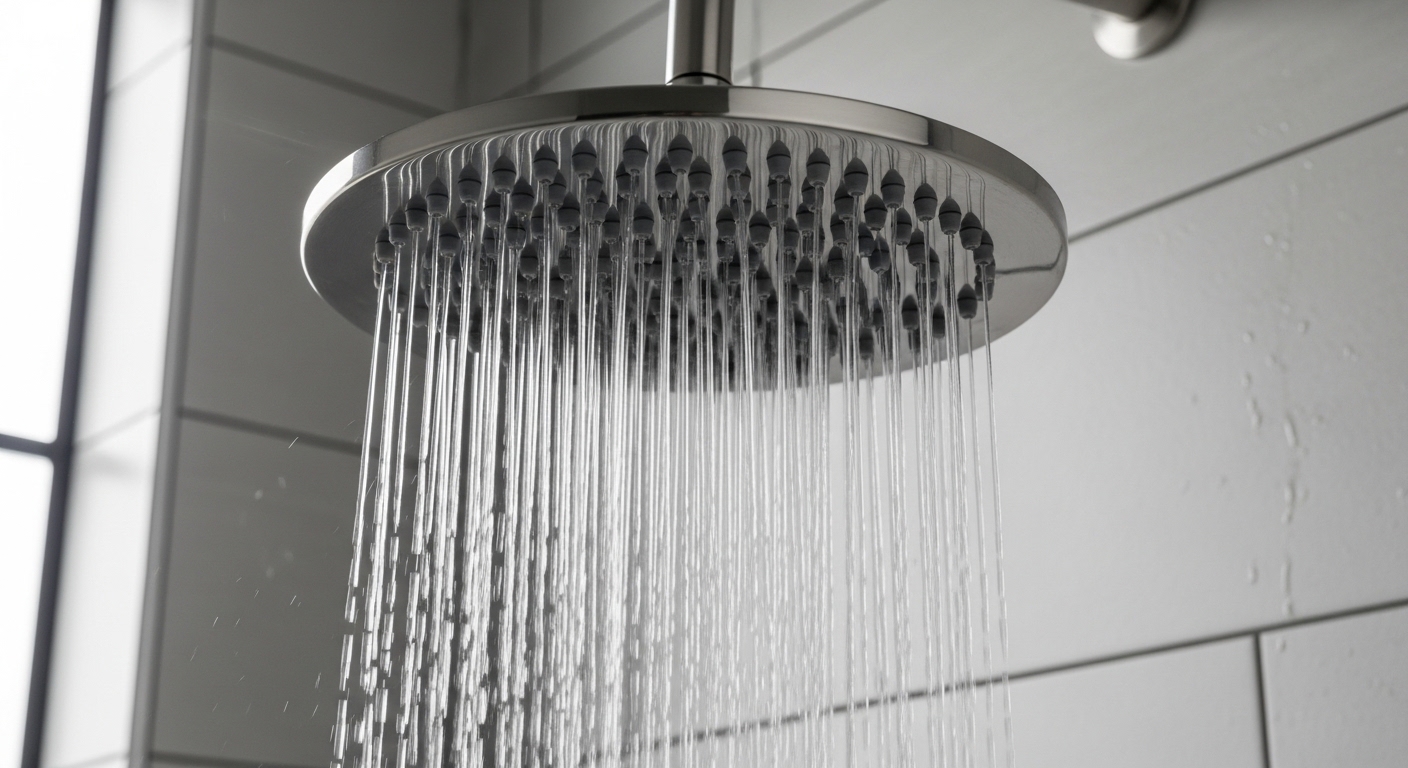
A Zenea shower head is a modern, pressure-boosting shower head — usually a wide round or square face with dozens of soft silicone spray nozzles, sold in fixed wall-mount, handheld, or combo versions. It’s aimed at everyday homeowners who want a strong, wide, rainfall-style spray at a middle-of-the-road price, roughly $25–$70 depending on style and finish.
It’s the right fit if you check most of these boxes:
- Your current shower feels weak, patchy, or misty and you want denser coverage.
- You live somewhere with hard water and are sick of scrubbing mineral crust off metal nozzles.
- You want a spa look (rainfall face, matte black or brushed nickel) without a luxury-brand price tag.
- You rent or want a tool-free swap you can do in ten minutes.
It’s not the right fit if you need a full ceiling-mounted rain panel, a thermostatic shower system, or a code-restricted low-flow head below 1.8 GPM for a strict water-conservation jurisdiction. Those are different product categories, and we’ll flag when you’ve outgrown a standard wall head.
How much water pressure do you need for a Zenea shower head to feel strong?
You need at least about 40 psi of home water pressure for a Zenea-style head to feel genuinely strong, and it performs best between 45 and 80 psi. Below ~40 psi even a “high-pressure” head will feel soft, because no shower head creates pressure — it only shapes and concentrates the flow you already have.
Here’s the part most product pages won’t tell you plainly: these heads feel powerful because of two design tricks, not magic. First, they narrow the internal channel so water exits faster (higher velocity = harder-hitting spray). Second, they use a moderate flow rate — commonly 2.5 GPM (gallons per minute) — and split it across many small nozzles for dense, even coverage. If your house genuinely has low pressure (old pipes, top-floor apartment, well system on a bad day), a self-pressurizing head helps a little, but the real fix may be upstream.
Flow rate matters as much as pressure, and it’s tightly tied to how your shower feels. If you want to understand the number stamped on the box, our deep dive on what GPM a shower faucet should be — and whether higher GPM actually means a better shower explains why 2.5 GPM is the standard, why 1.8 GPM heads can still feel great, and when a “high flow” claim is just marketing. Read it before you assume more gallons equals a better shower — often it doesn’t.
Should you get the 2.5 GPM or a low-flow 1.8 GPM version?
Get the 2.5 GPM version if your area allows it and you want maximum drench-feel; choose 1.8 GPM if you’re in California, Colorado, Washington, or another state with a 1.8 GPM cap, or if you want to cut water and heating costs. The U.S. federal maximum is 2.5 GPM at 80 psi, but several states legally require 1.8 GPM or lower. A well-designed 1.8 GPM head still feels strong because of the velocity trick above — you lose gallons, not necessarily punch.
Fixed, handheld, or combo — which Zenea shower head style should you choose?
Choose a fixed wall head for the simplest, cleanest look; a handheld for flexibility (rinsing kids, pets, or the shower walls); and a combo (fixed head + handheld on a diverter) if you want both and can spend a little more. For most households, the handheld or combo is the more practical buy because you use that flexibility more often than you’d expect.
| Style | Best for | Typical price | Trade-off |
|---|---|---|---|
| Fixed wall head | Minimalist look, single-user showers, quick swap | $25–$45 | Can’t detach to rinse or clean |
| Handheld on slide bar/hose | Families, pets, cleaning, adjustable height | $35–$60 | Hose can look busier; one more connection to seal |
| Combo (fixed + handheld) | Shared bathrooms wanting both modes | $50–$75 | Needs a diverter; slightly more install steps |
One thing to check before you buy a handheld or combo: how the water switches between the fixed head and the wand. That switching part is a diverter, and if you’ve ever had a shower where water dribbles from both outlets at once, that’s a diverter problem. Our guide on what a spray diverter is and how to fix or replace one is worth a skim so you know what you’re dealing with if it ever acts up.
What finish should you pick — and does it actually matter?
Pick brushed nickel or matte black for the best mix of looks and low maintenance; chrome is cheapest and shiniest but shows water spots fastest. Finish is partly style, but it also affects how often you’ll be wiping the thing down, so it’s a real practical decision, not just a color swatch.
- Brushed nickel: Warm, satin look that hides water spots and fingerprints better than chrome. The easiest finish to live with in a hard-water home.
- Matte black: Bold, modern, hides fingerprints well — but hard-water minerals can leave visible white flecks, so you’ll wipe it more in hard-water areas.
- Chrome: Brightest and usually the least expensive, matches most existing fixtures, but shows every water spot and streak.
- Brushed gold / champagne bronze: On-trend and warm, best in soft-water homes where spotting is less of an issue.
If you’re weighing the low-maintenance angle, we made the full case in are brushed nickel faucets worth it — the same logic applies to shower heads. And whatever finish you land on, match it (or intentionally contrast it) with your handles and tub spout so the bathroom reads as designed, not random.
How do you install a Zenea shower head yourself?
You can install a standard Zenea shower head in about 10 minutes with no tools beyond an adjustable wrench and some plumber’s tape — because nearly all U.S. shower arms use a universal 1/2-inch NPT thread. Here’s the whole process:
- Remove the old head. Turn it counterclockwise by hand. If it’s stuck, grip the shower arm with a cloth-wrapped wrench so you don’t scratch it, and turn the head with a second wrench or by hand.
- Clean the threads. Wipe old plumber’s tape and gunk off the shower arm threads so the new seal is clean.
- Wrap plumber’s tape. Wrap 3–4 turns of PTFE (Teflon) tape clockwise around the shower arm threads. This prevents leaks at the joint.
- Hand-tighten the new head. Screw the Zenea head on clockwise until snug. Then give it a gentle quarter-turn with a cloth-wrapped wrench — don’t over-crank, or you can crack plastic threads.
- Test. Run the shower and watch the connection. A slow drip at the joint means you need another wrap of tape or a slightly firmer turn.
If you’re also swapping the diverter, wand hose, or dealing with older pipes, expect a couple extra steps. And if water shows up somewhere it shouldn’t — like at the wall behind the arm rather than the head — that’s a separate issue; see our fix for a tub spout leaking at the wall for the same behind-the-wall logic that applies to shower arms.
Why does a shower head clog, and how do you keep a Zenea head spraying strong?
Shower heads clog because hard-water minerals (calcium and magnesium) build up inside the nozzles and channels; a Zenea-style head fights this with flexible silicone nozzles you can rub clean with your thumb, but you should still descale it every 1–3 months in hard-water areas. Keeping it clean is the single biggest factor in whether your “high-pressure” head still feels high-pressure a year later.
The easy maintenance routine:
- Rub the nozzles. Every week or two, run your finger or thumb across the silicone tips while the water runs — this pops off soft mineral flecks before they harden.
- Vinegar soak. Every 1–3 months, fill a plastic bag with white vinegar, tie it around the head so the nozzles are submerged, and leave it 1–4 hours. Then run hot water and rub the nozzles.
- Deep clogs. If flow is uneven after soaking, unscrew the head and rinse the internal screen/filter — minerals and pipe debris collect there first.
For the exact ratios and the trick to not damaging your finish while descaling, our walkthrough on how to clean hard water stains from a faucet covers the same chemistry you’ll use on the shower head. If you’re on genuinely hard water, this maintenance is the difference between a head that lasts five years and one that feels dead in eight months.
Is a Zenea shower head worth it compared to premium brands?
For most homeowners, yes — a Zenea-style head delivers 80–90% of the shower feel of a $200+ premium head at a fraction of the price, and the meaningful differences show up in valve quality and warranty, not in the spray itself. Where you pay more with luxury brands is finish durability, solid-brass internals, and longer coverage — not necessarily a better everyday shower.
Be honest about what you actually need. If you want a strong, good-looking daily shower and you’re willing to do simple descaling, a mid-range head is the smart-money choice. If you’re building a spa bathroom with a thermostatic valve, body sprays, and a ceiling rain panel, you’re in a different budget tier and should buy the whole system as a matched set. And if you’re deciding whether you even need the fixed head plus a tub spout, our comparison on whether you need a full shower system tub spout or just a shower head helps you avoid over-buying.
What about water pressure complaints — is it the head or the house?
If a new shower head still feels weak, the problem is usually your home’s pressure or a clogged flow restrictor, not the head itself. Before blaming the fixture, check for a kinked handheld hose, a partially closed shut-off valve, or mineral buildup on the internal screen. A cheap pressure gauge on an outdoor spigot (should read 45–80 psi) tells you fast whether it’s a whole-house issue worth a plumber’s look.
Quick spec cheat-sheet before you buy
| Spec to check | What you want | Why it matters |
|---|---|---|
| Flow rate | 2.5 GPM (or 1.8 GPM if state-restricted) | Controls drench-feel and water/heating cost |
| Thread size | 1/2-inch NPT (universal) | Ensures it fits your existing shower arm |
| Nozzles | Flexible silicone | Rub-clean, resists hard-water clogging |
| Finish | Brushed nickel / matte black | Hides spots, low maintenance |
| Warranty | Limited lifetime on finish/function | Signals the maker stands behind it |
FAQ
Will a Zenea shower head fit my existing shower arm?
Almost certainly yes. Standard shower arms in the U.S. and Canada use a universal 1/2-inch NPT thread, and Zenea-style heads are built to match. As long as you have a normal wall-mounted shower arm sticking out of the tile, it will screw right on with plumber’s tape — no special adapter needed.
Does a Zenea shower head really increase water pressure?
It doesn’t create pressure, but it can make your existing pressure feel stronger. By narrowing the internal channel and concentrating flow through many small nozzles, it increases water velocity so the spray hits harder. If your home pressure is genuinely low (under 40 psi), the improvement is modest — the real fix would be upstream at your pipes or pressure regulator.
How often should I clean it if I have hard water?
Rub the silicone nozzles every week or two, and do a full white-vinegar soak every 1–3 months. Hard water is the number-one reason shower heads lose pressure over time, so this quick routine is what keeps the spray strong. If you notice uneven or weak jets, that’s your cue to descale sooner.
Can I install it myself, or do I need a plumber?
You can absolutely do it yourself in about 10 minutes — it’s one of the easiest bathroom upgrades there is. You only need an adjustable wrench and plumber’s tape, and there’s no need to shut off your main water for a simple head swap. Call a plumber only if you’re also moving the shower arm, replacing the valve, or dealing with corroded, leaking pipes inside the wall.
Is 2.5 GPM or 1.8 GPM better for a family bathroom?
For raw drench-feel, 2.5 GPM wins; for saving water and hot-water heating costs across a busy family, 1.8 GPM is smarter and often feels nearly as strong. Check your state rules first — some states legally cap shower heads at 1.8 GPM. If you’re allowed 2.5 GPM and everyone’s showers are short, go with it; if you have several long showers a day, the 1.8 GPM savings add up fast.
What if my new shower head leaks at the connection?
A drip where the head meets the shower arm almost always means the thread seal isn’t tight enough. Unscrew the head, add 3–4 fresh clockwise wraps of PTFE plumber’s tape to the arm threads, and hand-tighten firmly with a gentle wrench nudge. Ninety percent of “leaky new shower head” complaints are solved in two minutes this way.
Author note: This guide was written by the Fransiton fixtures team, drawing on hands-on testing of dozens of fixed, handheld, and combo shower heads across a range of home water pressures and hard-water conditions. About Fransiton: Fransiton designs and sells faucets, shower heads, and bathroom fixtures built to standard U.S. 1/2-inch NPT fittings and evaluated against common flow-rate and finish-durability benchmarks. Our shower heads are pressure- and leak-tested before shipping, and quality-focused models are backed by a limited warranty on finish and function — always keep your receipt and register the product to activate coverage.