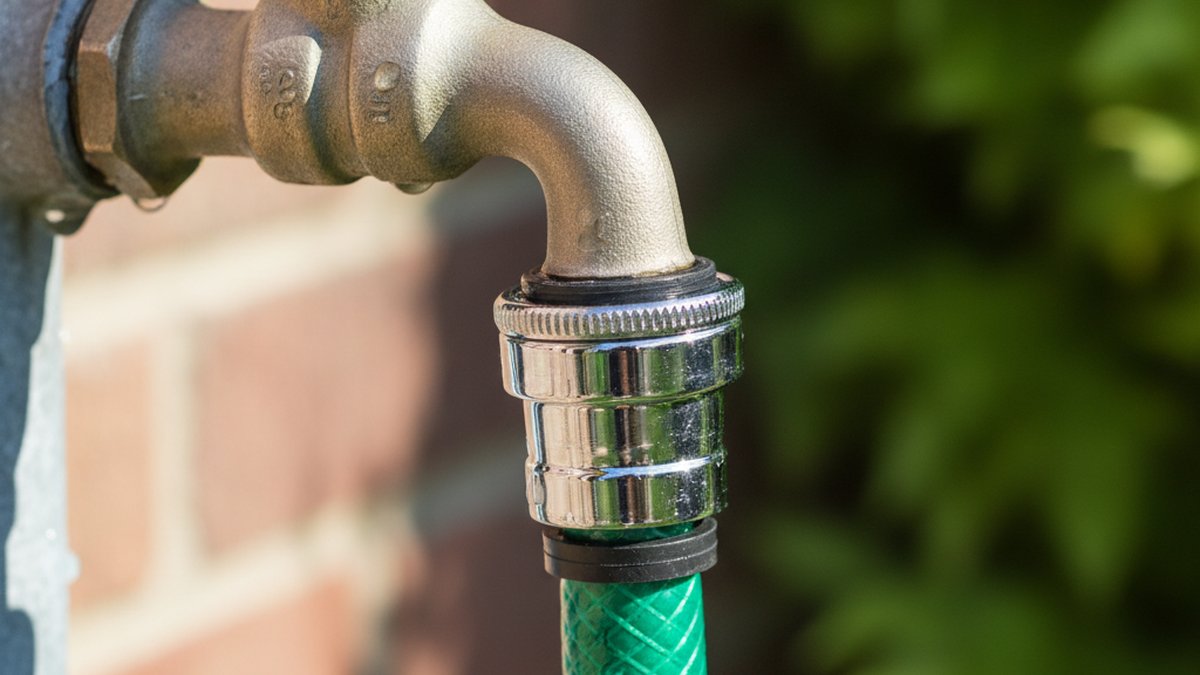
If you’ve ever tried to run a hose off a tap and ended up with water spraying everywhere, you already understand why the right garden hose faucet mount matters more than the hose itself. The mount is the small threaded fitting where hose meets faucet, and 90% of hose leaks happen right there — wrong thread type, a missing washer, or a cross-threaded connection. This guide breaks down exactly which mount you need for your situation (outdoor spigot, indoor tap, or laundry sink), how to attach it without leaks, and what to buy so you’re not back at the hardware store next weekend.
At fransiton, we design and stress-test outdoor and indoor faucet fittings, so the recommendations below come from bench testing real connections at typical U.S. household pressures (40–80 psi), not marketing copy.
What exactly is a “garden hose faucet mount,” and which type do I have?
A garden hose faucet mount is simply the male-threaded outlet that a hose’s female coupling screws onto. In North America that thread is almost always 3/4-inch GHT (Garden Hose Thread, also written 11.5 NH) — a coarse, wide thread that’s deliberately different from pipe thread so it seals with a flat rubber washer instead of tapered metal-on-metal.
Here’s the fast way to identify what you’re working with:
- Outdoor spigot / hose bibb: Almost always already has 3/4″ GHT male threads. You screw the hose straight on — no adapter needed unless the threads are damaged.
- Frost-proof outdoor faucet: Same 3/4″ GHT mount at the tip, just with a longer stem running back into a heated wall. If you’re not sure whether you have one, read what an outdoor faucet frost proof design is and whether you need one — it matters a lot for winter.
- Kitchen or bathroom faucet: Has fine aerator threads (typically 15/16″-27 male or 55/64″-27 female), NOT hose thread. You need an aerator-to-GHT adapter to mount a hose.
- Laundry / utility sink faucet: Sometimes has a hose-thread nose already; if not, same aerator adapter as above.
The single biggest mistake is assuming all “threaded” outlets are the same. Garden hose thread and NPT pipe thread look similar but will never seal against each other — forcing them just chews up the threads.
What’s the best garden hose faucet mount for an outdoor spigot that won’t leak?
For a leaking or stripped outdoor spigot, the best fix is a solid-brass 3/4″ GHT hose mender or a brass quick-connect adapter with a fresh rubber washer — brass resists corrosion far better than the plastic or thin zinc adapters that crack after one winter. If the whole spigot handle is the problem rather than the threads, you may just need parts, not a new faucet.
When a hose won’t stop dripping at an outdoor tap, run through this order:
- Check the washer first. Flip the hose coupling over — there should be a flat rubber (or EPDM) washer inside. If it’s missing, flattened, or cracked, a 20-cent replacement fixes most leaks instantly.
- Inspect the spigot threads. Nicked or rounded threads won’t seal. A brass thread-repair adapter screws over the damage and gives you a fresh mount surface.
- Look at the handle and packing nut. If water leaks from the top of the spigot when the hose is on, the leak isn’t at the mount at all. See the outdoor faucet handle replacement parts you actually need for stripped stems and packing washers.
- Add a quick-connect set (optional). If you swap hoses constantly, a brass quick-connect on the spigot plus mating ends on each hose saves your threads long-term.
How do I attach a garden hose to an indoor faucet that has no hose threads?
Unscrew the aerator at the tip of your faucet, then thread on a metal aerator-to-GHT adapter that matches your faucet’s thread size — that converts the fine aerator threads to standard 3/4″ garden hose thread so a hose screws right on. Total job time is about three minutes.
The one specification you must get right is the aerator thread size, because faucets come in several. Here’s how to nail it:
| Faucet aerator type | Thread size | Adapter you need | Common on |
|---|---|---|---|
| Male aerator (threads on outside of spout) | 15/16″-27 | Female 15/16″ → 3/4″ GHT | Most U.S. kitchen faucets |
| Female aerator (threads inside spout) | 55/64″-27 | Male 55/64″ → 3/4″ GHT | Many bathroom faucets |
| Small male (junior) | 13/16″-24 | 13/16″ → 3/4″ GHT | Compact / bar faucets |
| Dual-thread | Both 15/16″ & 55/64″ | Universal dual adapter | Modern pull-down faucets |
If you’re not sure whether your faucet is male or female threaded, look straight into the spout: if you can see threads on the inside rim, it’s female; if the threads are on the outer surface, it’s male. When in doubt, a “universal dual-thread” adapter covers both of the common sizes and is what we’d recommend for most kitchens. The same aerator thread knowledge helps if you’re ever replacing the aerator itself — our guide on the right tap aerator and how to fit it walks through sizing in detail.
Keep in mind an indoor mount is best for short, temporary jobs — filling a bucket, running a pressure washer, watering nearby beds. Indoor supply lines aren’t built for a hose left pressurized all day, and most kitchen aerators flow 1.5–1.8 gpm versus 3+ gpm at an outdoor spigot.
Brass vs. plastic vs. stainless: which garden hose faucet mount material lasts?
Solid brass is the best all-around material for a garden hose faucet mount — it won’t crack in freezing weather, resists corrosion, and grips threads without deforming. Reserve plastic for indoor, low-pressure, seasonal use only, and choose stainless when you’re near saltwater or want the cleanest look.
| Material | Freeze resistance | Lifespan (outdoor) | Best for | Rough price |
|---|---|---|---|---|
| Solid brass | Excellent | 10+ years | Outdoor spigots, year-round use | $6–$14 |
| Stainless steel | Excellent | 10+ years | Coastal / saltwater, premium look | $10–$20 |
| Zinc alloy (die-cast) | Fair | 2–4 years | Budget, mild climates | $3–$7 |
| Plastic / nylon | Poor | 1–2 seasons | Indoor, temporary hookups | $2–$5 |
One field note from our testing: zinc-alloy adapters are the ones that seize onto brass spigots. Dissimilar metals plus outdoor moisture cause galvanic corrosion, and after a year the two fuse together. If you’re mounting to a brass spigot, use brass; the pair threads on and off cleanly for years.
Why does my garden hose still leak at the faucet even after tightening it?
If a hose still leaks after you’ve cranked it tight, the problem is almost never “not tight enough” — it’s a bad or missing washer, cross-threading, or mismatched thread types. Over-tightening actually makes leaks worse because it crushes the washer out of shape.
Work through these in order:
- Replace the washer. This solves the majority of hose-mount drips. Use a flat rubber washer for standard connections; use a thicker “washer with O-ring/screen” for quick-connects.
- Back off and re-thread. If the coupling went on crooked (cross-threaded), it’ll never seal. Unscrew completely, line it up square, and start by turning counter-clockwise until you feel the threads “drop,” then tighten.
- Confirm thread compatibility. A GHT hose forced onto NPT pipe thread will always weep. If the threads feel gritty and won’t seat, you likely have a thread mismatch and need the correct adapter.
- Don’t rely on Teflon tape at a GHT joint. Garden hose thread seals on the washer face, not the threads — tape does nothing here. (Save the PTFE tape for NPT pipe-thread joints, like where a spigot screws into supply pipe.)
- Check for a hairline crack. Freeze-damaged brass or cracked zinc will leak no matter what. Replace the fitting.
If the drip is coming from behind the mount — from the faucet body or handle rather than the hose connection — that’s a faucet repair, not a mount problem. Our walkthrough on why a faucet drips from the spout and how to stop it fast covers the internal cartridge and washer fixes for that scenario.
Can I leave a garden hose faucet mount attached over winter?
No — in any climate that freezes, disconnect the hose and adapter before the first hard freeze. A mounted hose traps water in the spigot, and when it freezes and expands it can split the faucet or the pipe inside your wall, even on a “frost-proof” spigot.
The rule is simple: a frost-proof spigot only works if the hose is removed, because the design relies on water draining back out of the long stem. Leave a hose screwed onto the mount and you defeat the drain, trap water at the vulnerable end, and risk a burst. Every fall, do three things: shut the interior stop valve if you have one, unscrew the hose and adapter from the mount, and open the spigot briefly to let it drain. Store brass adapters indoors and they’ll outlast the hose.
What should I actually buy? A quick buyer’s checklist
For most homeowners, buy a solid-brass 3/4″ GHT adapter matched to your outlet, plus a small pack of rubber washers. That combination covers outdoor spigot repairs and indoor hookups for well under $15.
- Outdoor spigot with worn threads: Brass thread-repair/mender adapter + washer pack.
- Indoor kitchen faucet: Universal dual-thread aerator-to-GHT adapter (metal, not plastic).
- Frequent hose swaps: Brass quick-connect set — one on the spigot, mating ends on each hose.
- Laundry / utility sink: Check the nose thread first; grab a female-15/16″ adapter if it isn’t already hose-threaded.
Whatever you choose, prioritize the washer condition over the fitting brand — a $12 brass adapter with a shot washer leaks just as badly as a $2 one. If your project has grown into replacing supply lines or the faucet feed itself, our guide to the faucet supply line under the sink and which one to buy will help you match the right braided line and connection.
FAQ
Are all garden hose threads the same size in the U.S.?
Yes — residential garden hoses in the U.S. and Canada use a single standard: 3/4-inch GHT (11.5 NH). That’s why any standard hose screws onto any standard spigot. The variation you run into is at faucets and specialty tools, which use their own aerator or pipe threads and need an adapter to reach that 3/4″ GHT standard.
Do I need Teflon tape on a garden hose faucet mount?
No. Garden hose thread connections seal on a flat rubber washer at the face of the joint, not on the threads themselves, so PTFE (Teflon) tape does nothing there and can even shed bits into the water. Save the tape for tapered pipe-thread (NPT) joints, such as where a new spigot threads into your supply pipe.
Will connecting a hose to my kitchen faucet reduce water pressure?
Slightly, yes. Indoor faucets are flow-restricted to around 1.5–1.8 gpm and the aerator adapter adds a small restriction, so you’ll notice less punch than an outdoor spigot delivers. It’s fine for filling buckets or watering, but for pressure-washing or long watering runs, an outdoor spigot mount is the better source.
How tight should I make the hose connection?
Hand-tight plus about a quarter-turn with pliers or a strap wrench. If it still weeps, stop tightening and replace the washer — cranking harder crushes the washer and makes the leak worse, and can crack brass or zinc fittings.
Can a garden hose faucet mount handle a pressure washer or drip irrigation?
For the intake side, yes — pressure washers and drip systems both draw from a standard 3/4″ GHT mount, so a solid-brass adapter is ideal. Just don’t confuse the mount with the high-pressure output side of a washer, which uses its own dedicated fittings rated for far higher psi.
About the author: This guide was written by the fransiton fixtures team, who design, spec, and bench-test indoor and outdoor faucet fittings. We test hose-mount connections for leak resistance at typical U.S. household pressures (40–80 psi) and freeze-cycle brass adapters to verify winter durability.
Why trust fransiton: fransiton (fransiton.net) is a dedicated faucet and bathroom-fixtures brand. Our brass adapters and outdoor fittings are built to standard 3/4″ GHT and NSF/ANSI-relevant material specs, and are backed by a limited manufacturer warranty against defects — so a mount rated for outdoor use is one we’d install on our own homes.