Here is the complete, publish-ready HTML article:
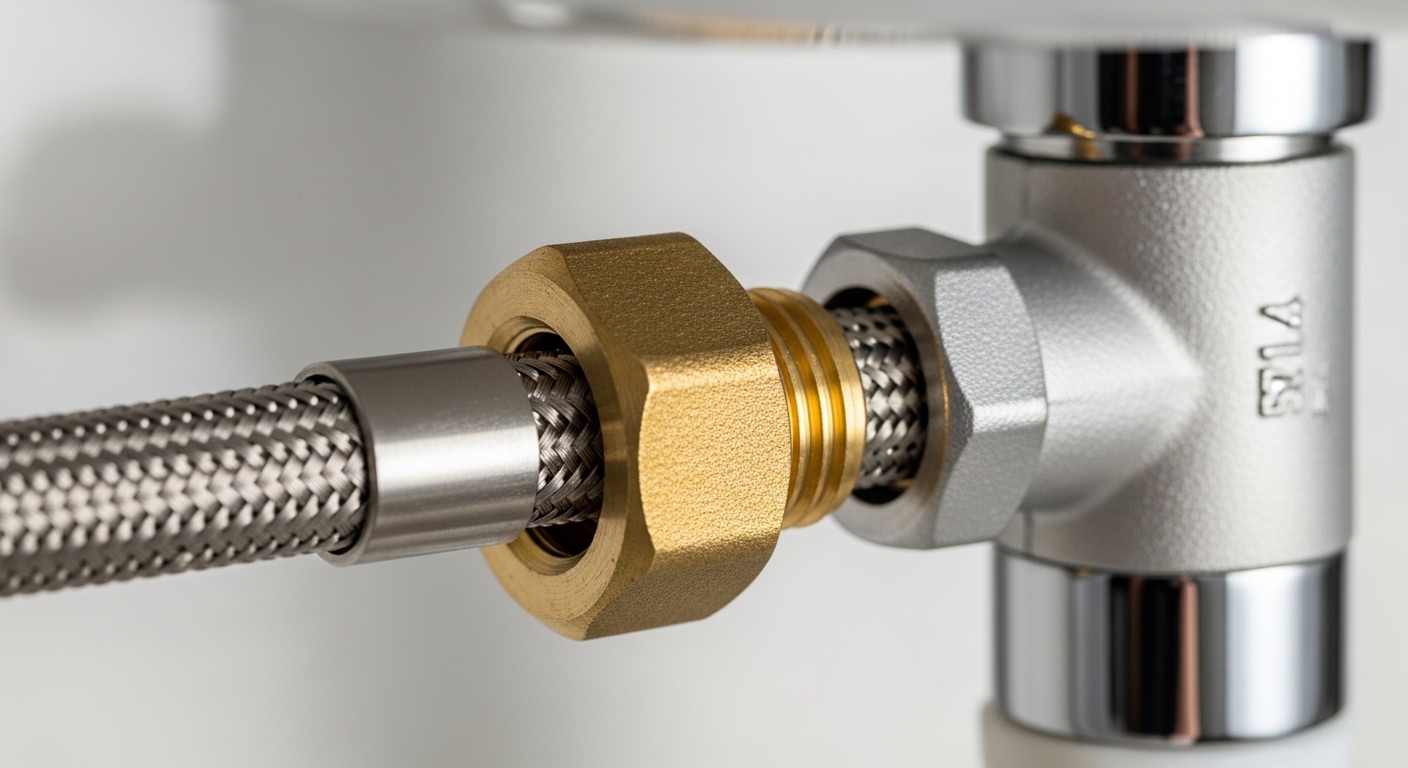
If you’ve ever crouched under a sink staring at a leak and wondered which little connector you actually need, you’re in the right place. A faucet supply line coupling is the small but critical fitting that joins two water lines or joins a supply line to your shut-off valve. Get the size and thread type right and you’ll have a drip-free connection that lasts a decade; get it wrong and you’ll be back under the cabinet with a towel and a bucket. This guide walks through exactly what to buy, how the sizes work, and how to install one without a plumber.
At Fransiton, we make and test bathroom and kitchen fixtures every day, and the questions we get most often aren’t about flashy faucet finishes — they’re about the unglamorous connections that actually keep water where it belongs. So let’s get specific.
What exactly does a faucet supply line coupling do?
A faucet supply line coupling joins two ends of plumbing — most often it connects a flexible supply line (the braided hose running up to your faucet) to the shut-off valve coming out of the wall, or it splices two supply lines together to extend a run. It creates a watertight, pressure-rated seal at a threaded joint without you needing to solder copper or glue PVC.
Think of it as the handshake between two pipes. On one side you have water coming from the wall under household pressure (usually 40–80 psi). On the other side you have the line feeding your faucet. The coupling clamps those two together and holds the seal. Because it sits in a cabinet you rarely open, a quality coupling is one of those “buy once, forget about it” parts — and a cheap one is a slow leak waiting to happen.
There are three common jobs a coupling does:
- Valve-to-supply connection: linking the angle stop (shut-off valve) to your faucet’s flexible supply hose.
- Line extension: coupling two supply lines together when one isn’t long enough to reach.
- Adapter coupling: bridging two different thread types or sizes (for example, a 3/8″ compression end to a 1/2″ NPT end).
What size faucet supply line coupling do I need?
For the vast majority of residential faucets in the U.S., you need a 3/8″ compression coupling on the valve side and a 1/2″ faucet-shank (or 7/16″) connection on the faucet side — but you must confirm by measuring, because “3/8 compression” describes the fitting standard, not the actual outer diameter. The safest move is to bring your old part to the store or measure the threads with a caliper.
Here’s the part that trips people up: plumbing sizes are “nominal,” meaning the label doesn’t match a ruler. A “3/8-inch” compression fitting actually has an outer diameter close to 1/2 inch. So don’t try to measure the pipe and match the number — match the fitting standard instead. The two ends of your supply line are usually different: the valve end is typically 3/8″ compression, and the faucet end is typed to your faucet’s tailpiece, commonly 1/2″ or 7/16″.
If you’re replacing a leaking faucet entirely, our walkthrough on how to install a kitchen faucet step by step shows where the supply lines and couplings fit into the bigger job, so you can buy everything in one trip.
How do I measure for the right coupling?
Measure the thread diameter and count the threads, or just take the old fitting to the hardware store. Most home connections fall into a handful of standard sizes, so once you identify the type, the size usually follows.
- Shut the water off at the angle stop under the sink (turn clockwise until snug).
- Unthread the existing supply line and look at both ends.
- Note the connection type on each end — smooth tube (compression), tapered male threads (NPT/MIP), or straight female threads (FIP).
- If unsure, measure the outer diameter of the male threads with a caliper and bring that number plus the part to the store.
Compression vs. NPT vs. push-fit: which coupling type is best?
For connecting a faucet supply line under a sink, a compression coupling is the most common and most forgiving choice because it seals on a brass ferrule with no thread sealant and no special tools beyond two wrenches. NPT (tapered pipe thread) couplings are best when you’re threading into a fixed pipe or valve body, and push-fit couplings are the fastest for DIYers but cost more. Here’s how they stack up.
| Coupling Type | How It Seals | Best For | Tools Needed | Typical Price |
|---|---|---|---|---|
| Compression | Brass ferrule compresses onto smooth tubing | Valve-to-supply line connections under sinks | Two adjustable wrenches | $3–$8 |
| NPT / MIP-FIP (threaded) | Tapered threads + PTFE tape or pipe dope | Threading into valves, pipe nipples, fixed fittings | Wrench + thread sealant | $2–$6 |
| Push-fit (quick-connect) | Internal O-ring + grip ring grabs the tube | Fast DIY repairs, tight spaces, no tools | None (hand push) | $6–$12 |
| Flare | Flared tube seats against a flare nut | Gas lines, some high-pressure water lines | Flaring tool + wrench | $4–$10 |
For a typical bathroom or kitchen faucet, compression wins on reliability and cost. Push-fit is genuinely great if you dread wrenches or you’re working in a cramped vanity, but it’s overkill (and pricier) for a straightforward swap. Flare and NPT have their place, but they’re not what you reach for on a standard flexible supply line.
What material should the coupling be made of?
Choose solid brass for water supply couplings — it resists corrosion, handles temperature swings, and won’t crack under torque the way cheaper zinc or plastic fittings can. Stainless steel is excellent too, especially in coastal or high-humidity homes, but brass is the long-standing standard for a reason.
Avoid plastic-bodied couplings on hot-water lines and anywhere they’ll see real pressure cycling. Plastic is fine for a temporary fix, but the threads strip easily and the body can become brittle over a few years. If you’ve been fighting mineral buildup on your fixtures, brass and stainless also shrug off the kind of scale that eats lesser metals — and if hard water is your nemesis, our guide on how to clean hard water stains from a faucet pairs nicely with choosing corrosion-resistant fittings.
How do I install a faucet supply line coupling without leaks?
To install a compression coupling leak-free: shut off the water, slide the nut and ferrule onto the tubing, seat the tube into the coupling body, then tighten the nut hand-tight plus about one full turn with a wrench while bracing the other side. Turn the water back on and check for drips before walking away. Over-tightening is the most common cause of leaks, not under-tightening.
Here’s the step-by-step for a standard compression connection:
- Turn off the water at the shut-off valve and open the faucet to release pressure.
- Place a towel and small bowl under the joint to catch residual water.
- Slide the compression nut onto the supply tube, then the brass ferrule (the small ring).
- Insert the tube fully into the coupling body so it bottoms out.
- Hand-thread the nut onto the coupling, then snug it with a wrench — about one full turn past hand-tight. Hold the coupling body steady with a second wrench so you don’t twist the line.
- Restore water slowly and watch the joint for 60 seconds. A weeping joint usually needs a quarter-turn more, not a full crank.
For threaded (NPT) connections, the only difference is you wrap the male threads with 2–3 turns of PTFE plumber’s tape (or apply pipe dope) before threading them together. Never use thread tape on a compression joint — the seal comes from the ferrule, not the threads, and tape can actually prevent a proper seal.
If you finish the job and still see a slow drip elsewhere, it may not be the coupling at all. Our guide on how to fix a dripping faucet at home helps you trace whether the leak is at the valve, the coupling, or the faucet itself.
Why is my new coupling still leaking?
A new coupling usually leaks for one of four reasons: the ferrule is misaligned, the tube didn’t seat fully, the nut is over-tightened and deformed the ferrule, or the thread type is mismatched. Disassemble, inspect the ferrule for crush marks, and re-seat the tube before re-tightening.
One sneaky culprit: reusing an old, already-compressed ferrule on new tubing. Once a brass ferrule has bitten into a pipe, it’s shaped to that exact spot. Always use a fresh ferrule and nut when you can. And if the threads feel gritty or cross-threaded, stop — back the nut all the way off and start over by hand to avoid stripping the brass.
Do I need a different coupling for hot vs. cold lines?
No — the coupling itself is identical for hot and cold supply lines; the size and thread standard are what matter, not the temperature. What changes is the material recommendation: for hot-water runs, stick with brass or stainless and skip plastic, because heat accelerates plastic fatigue.
That said, braided stainless supply lines are rated for both hot and cold and are the modern default. If you’re using older rigid copper or chrome supply tubes, the same compression coupling principles apply, but the tubing is less forgiving and more prone to kinking. When in doubt, replace rigid lines with braided ones during the repair — it’s a cheap upgrade that prevents future headaches.
What’s the difference between a coupling, a connector, and an adapter?
A coupling joins two lines of the same type or size, a connector (or supply line) is the flexible hose itself, and an adapter bridges two different thread types or sizes. People use these terms loosely, but buying the wrong category is the #1 reason a part doesn’t fit.
| Part | What It Is | When You Need It |
|---|---|---|
| Coupling | A fitting joining two like ends | Extending or splicing two supply lines |
| Connector / Supply line | The flexible braided or PVC hose | Running water from valve to faucet |
| Adapter | A fitting bridging mismatched sizes or thread types | Connecting 3/8″ compression to 1/2″ NPT, etc. |
| Angle stop / shut-off valve | The valve coming out of the wall | Controlling water to a single fixture |
If your existing supply line is the right length and only the fitting is the problem, a coupling or adapter is all you need. If the line is the wrong length, cracked, or corroded, replace the whole flexible connector — they’re inexpensive and come pre-fitted with the right ends.
How long does a faucet supply line coupling last, and when should I replace it?
A quality brass or stainless compression coupling lasts 10–15 years or more, but you should replace it any time you see green corrosion, mineral crust, a persistent weep, or whenever you disconnect the line for another repair. The ferrule deforms permanently on first use, so reconnecting an old joint is a common source of new leaks.
Proactively, it’s smart to inspect under-sink connections once a year — a 30-second glance for moisture or white scale. Catching a slow weep early prevents the cabinet-floor rot and mold that an unnoticed leak causes. If you ever notice the faucet handle getting loose around the same time, that’s a separate fix; our guide on a loose kitchen faucet handle covers that one.
Choosing a Fransiton coupling: what we test for
Every Fransiton supply line coupling is machined from lead-free, corrosion-resistant brass and pressure-tested before it ships. We hold our fittings to recognized industry standards for low-lead content (compliant with the U.S. Safe Drinking Water Act / NSF-61 lead-free requirements) and pressure-cycle each design to confirm it holds a seal well beyond normal household pressure. We back our couplings with a multi-year warranty because we’d rather over-build a $5 part than have it fail behind your cabinet.
When you’re shopping, look for three things: solid brass (not plated zinc), a matched ferrule included in the package, and a clearly stated thread standard so you know exactly what you’re buying. Those three details separate a coupling that lasts from one that leaks.
FAQ
Can I reuse an old faucet supply line coupling?
It’s not recommended. The brass ferrule compresses permanently onto the tubing the first time you tighten it, so reusing the coupling on a new line rarely seals well. A fresh nut and ferrule cost about a dollar and save you a repeat repair.
Do I need plumber’s tape on a compression coupling?
No. Compression couplings seal at the ferrule, not the threads, so PTFE tape isn’t needed and can actually interfere. Save the tape for tapered NPT/MIP threaded connections, where you wrap 2–3 turns clockwise before threading.
What’s the most common size for a bathroom faucet supply line coupling?
The most common setup is a 3/8″ compression connection on the shut-off valve side and a 1/2″ FIP connection on the faucet side. Always confirm by checking your existing line, since faucet tailpiece sizes can vary by brand and model.
How tight should I make a compression coupling?
Hand-tighten the nut first, then turn it about one full turn past hand-tight with a wrench while bracing the coupling body. Over-tightening crushes the ferrule and causes leaks — if it weeps, add a quarter-turn at a time rather than cranking hard.
Are push-fit couplings safe for permanent faucet connections?
Yes, reputable push-fit (quick-connect) couplings are rated for permanent in-wall and under-sink use and are certified to plumbing standards. They cost more than compression fittings but require no tools, making them a solid choice for tight cabinets or anyone uncomfortable with wrenches.
Why does my coupling leak only when the water is hot?
Hot water causes the fitting and tubing to expand slightly, which can open a marginal seal or stress a plastic body. Re-seat the joint, and if it’s a plastic coupling on a hot line, replace it with brass or stainless, which handle thermal cycling far better.
Author note: This guide was written by the Fransiton fixtures team, drawing on hands-on testing of supply-line fittings across our kitchen and bathroom product lines. Fransiton designs, manufactures, and pressure-tests faucets and plumbing components, and our recommendations reflect both lab testing and real installer feedback. As always, if a connection feeds a fixture under warranty, check the manufacturer’s spec sheet before swapping fittings.