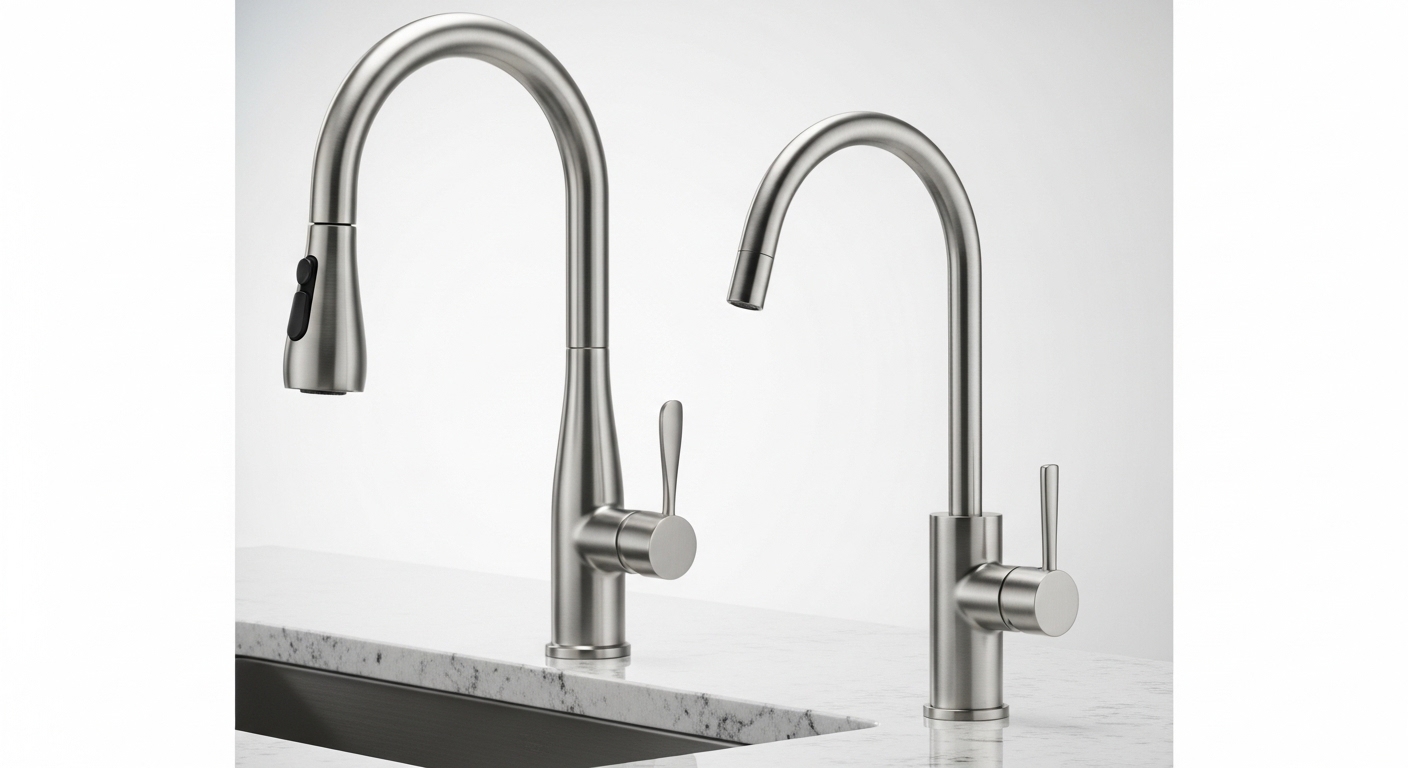
A stainless steel ro faucet is the small, dedicated drinking-water tap you mount next to your main kitchen faucet to deliver purified water from a reverse osmosis (RO) system. It’s a different animal from your regular kitchen faucet: it carries low-pressure, highly purified water that can actually be more aggressive toward cheap metals, so the body material matters more than people expect. If you’ve been staring at a wall of look-alike chrome taps wondering whether the stainless option is worth the extra few dollars, the short answer is almost always yes — and below we’ll explain exactly when, why, and how to pick the right one.
This guide is written for buyers, not browsers. We’ll cover what makes 304 stainless the safe pick, air-gap vs. non-air-gap, how to match the faucet to your sink and tubing, what a fair price looks like, and the specs that actually predict whether a faucet will still look good in five years.
What exactly is a stainless steel RO faucet, and how is it different from a regular tap?
A stainless steel RO faucet is a compact, single-handle (or single-lever) faucet made from food-grade stainless steel that dispenses only filtered water from your under-sink reverse osmosis system. Unlike your main faucet, it isn’t connected to hot/cold supply lines — it’s fed by a thin 1/4″ or 3/8″ tube from the RO unit’s storage tank, at much lower pressure (usually 5–14 psi).
That low-pressure, demineralized water is the key reason material matters. Reverse osmosis strips out minerals, which makes the water slightly “hungry” — it can leach metals from low-quality faucet bodies over time. A genuine 304 (or 316) stainless body is inert, lead-free, and won’t impart a metallic taste or corrode internally. By contrast, many bargain RO faucets use zinc alloy or chrome-plated brass with a thin coating that can flake or pit where the purified water sits.
Here’s what sets a dedicated RO faucet apart from a standard kitchen faucet:
- Single water path — it only carries cold, purified water; no mixing valve, no hot side.
- Slim profile — designed to fit beside an existing faucet or in a sprayer hole.
- Lower flow — paced to match a pressurized RO tank, not city water pressure.
- Air-gap option — some models include a built-in air gap to prevent drain backflow into your purified water.
Why is 304 stainless steel better than chrome or zinc for an RO faucet?
Because 304 stainless steel is solid, lead-free metal all the way through — there’s no plating to wear off and nothing for purified water to corrode. Chrome-plated zinc faucets look identical on day one but rely on a microns-thin finish over a cheap base metal; once that layer is breached at a seam or threaded joint, the zinc underneath can corrode and the finish bubbles.
For drinking water specifically, three things make stainless the smart buy:
- Health and taste. 304/316 stainless is the same grade used in commercial kitchens and food processing. It won’t leach lead and won’t add a tinny taste to mineral-free RO water.
- Corrosion resistance. The chromium content forms a self-healing oxide layer, so even scratches don’t rust. This is critical for water that contacts the internal waterway constantly.
- Longevity of finish. A brushed stainless finish is integral to the metal, so it resists the spotting and flaking that plague plated finishes — especially helpful if you have hard water elsewhere in the home. (If you’re already battling mineral spots, our guide on how to clean hard water stains from a faucet shows how much easier solid stainless is to keep clean.)
The trade-off is modest: a quality stainless RO faucet runs maybe $10–$30 more than a comparable plated model. Spread over a 10-year lifespan, that’s pennies a month for water that tastes clean and a tap that still looks new.
Air-gap vs. non-air-gap: which stainless RO faucet do I actually need?
Get an air-gap faucet only if your local plumbing code requires it or your RO manufacturer specifies it; otherwise a non-air-gap stainless RO faucet is simpler, quieter, and just as safe for most homes. The air gap is a backflow-prevention feature that stops dirty drain water from ever siphoning back into your purified line — important in some jurisdictions, but it adds a third tube and can make a faint gurgling sound when the system flushes.
Here’s the practical breakdown:
| Feature | Air-Gap RO Faucet | Non-Air-Gap RO Faucet |
|---|---|---|
| Tubes to connect | 3 (supply, drain in, drain out) | 1 (supply only) |
| Backflow protection | Built-in physical air gap | Relies on system check valves |
| Noise | Occasional gurgle during flush | Silent |
| Install difficulty | Moderate | Easy |
| Required by some plumbing codes | Yes | No |
| Typical price | $35–$80 | $25–$60 |
Rule of thumb: check your RO system’s manual and your local code first. If neither demands an air gap, the non-air-gap stainless faucet is the cleaner, more reliable choice for the vast majority of households.
How do I make sure a stainless RO faucet fits my sink and RO tubing?
Measure three things before you buy: your mounting hole diameter, your countertop/sink-deck thickness, and your RO tube outer diameter. Most dedicated RO faucets fit a standard 1/2″ mounting hole (the same accessory or sprayer hole many sinks already have), but the details trip people up.
Run through this quick checklist:
- Mounting hole: Standard is 1/2″ (12.7 mm). If your sink has no spare hole, you’ll need to drill stainless or use the existing sprayer hole. Granite or quartz countertops require a diamond bit.
- Deck thickness: Confirm the faucet’s threaded shank is long enough for your countertop. Thick stone counters (over 1.5″) sometimes need an extended shank.
- Tube size: Most RO systems use 1/4″ tubing; some use 3/8″. Match the faucet inlet, or buy the correct push-to-connect fitting or adapter.
- Spout height and reach: Make sure the spout clears your sink’s edge so you can fill a tall pitcher or water bottle.
The connection from the tank to the faucet is where many DIY installs leak. A proper push-fit or compression connection makes all the difference — if you’re unfamiliar with how these joints seal, our explainer on the faucet supply line coupling walks through the fitting types and how to get a drip-free seal. And if you want a confidence boost on the overall under-sink workflow, the principles in our step-by-step kitchen faucet installation guide carry over directly to mounting an RO tap.
What finish should I choose — brushed, polished, or matte black stainless?
Choose the finish that matches your existing kitchen faucet first; brushed (satin) stainless is the safest, most forgiving pick because it hides water spots and fingerprints far better than polished chrome or matte black. The good news is that “stainless steel RO faucet” usually refers to both the material and a brushed look, so you often get durability and the popular finish in one.
Quick guidance by kitchen style:
- Brushed/Satin stainless — best all-rounder; pairs with stainless appliances and brushed nickel faucets. Easiest to keep looking clean.
- Polished stainless/chrome look — bright and traditional, but shows every water spot and smudge.
- Matte black (over stainless) — modern and striking; check that the coating is rated for potable water and is scratch-resistant.
If your main faucet is brushed nickel and you’re wondering whether the looks and durability hold up, our take on whether brushed nickel faucets are worth it applies to the matching RO tap too. And if you’re still finalizing your whole kitchen or bath fixture palette, how to choose the right bathroom faucet covers the finish-coordination principles that keep a space looking intentional.
How much should a good stainless steel RO faucet cost?
A quality stainless steel RO faucet costs $25–$80, with most homeowners landing around $35–$50 for a solid 304 stainless, lead-free, non-air-gap model. Anything under $20 is usually plated zinc dressed up to look like stainless; anything over $90 is typically paying for designer styling rather than better water quality.
Here’s what your money buys at each tier:
| Price Range | What You Typically Get | Best For |
|---|---|---|
| $15–$25 | Plated zinc or thin stainless, basic seal, short warranty | Short-term or rental use |
| $25–$50 | Solid 304 stainless, lead-free certified, ceramic-disc or quality valve | Most homeowners (best value) |
| $50–$80 | 304/316 stainless, air-gap option, designer finishes, longer warranty | Code-required air gap or premium kitchens |
When comparing models, weigh the spec sheet over the photo. Look for “304 stainless steel,” “lead-free,” a certification reference (NSF/ANSI 61 or 372 for lead-free), and a stated warranty. Those three lines tell you more about a faucet’s real quality than any product render.
How do I install a stainless steel RO faucet?
You can install a non-air-gap stainless RO faucet in about 20–30 minutes with basic tools — no plumber required for most setups. Here’s the streamlined process:
- Shut off the RO tank valve and relieve pressure by opening the old faucet (if replacing one).
- Insert the faucet through your sink’s spare or sprayer hole; add the rubber/metal washers above and below the deck as directed.
- Tighten the mounting nut from below until the faucet is snug and won’t rotate. Don’t overtighten on stone.
- Connect the RO tubing to the faucet inlet using the included push-to-connect fitting or compression nut; seat the tube fully.
- Open the tank valve, then open the faucet and let it run a few minutes to flush and check for leaks at every joint.
- Inspect the connection for any drip; a tiny push-fit reseat or a quarter-turn on a compression nut usually fixes it.
If you do spot a slow drip after install, don’t panic — most are simple to chase down, the same way you’d handle a dripping faucet at home. Reseating the tube or checking the washer stack solves the vast majority of RO faucet leaks.
Author note & why trust Fransiton
About the author: This guide was written by the Fransiton product team, who spend their days specifying, stress-testing, and reviewing customer feedback on dedicated drinking-water and kitchen faucets. We’ve handled hundreds of RO faucet installs and returns, so the advice here reflects what actually fails in the field — flaking plated finishes, leaky push-fit joints, and air-gap models bought when a simple non-air-gap tap would have done.
About Fransiton: Fransiton (fransiton.net) designs and sells faucets and bathroom fixtures built around food-grade 304 stainless steel and lead-free waterways. Our dedicated RO faucets are constructed from solid 304 stainless, pressure-tested before shipping, and built to meet lead-free standards aligned with NSF/ANSI 372. Each faucet is backed by a manufacturer warranty, and we publish real specs — material grade, certification, and tube compatibility — so you can buy on facts, not finish photos. We focus exclusively on faucets, showers, and bathroom fixtures, so the people answering your questions actually know the product.
FAQ
Is a stainless steel RO faucet safe for drinking water?
Yes. Solid 304 (or 316) stainless steel is food-grade, lead-free, and inert, so it won’t leach metals into purified water or affect taste. Look for a model that states “lead-free” and references NSF/ANSI 61 or 372 to confirm it’s certified for potable use.
Do I need an air-gap RO faucet?
Only if your local plumbing code or your RO system’s manufacturer requires one. An air gap prevents drain backflow into your purified line, but most modern RO systems use check valves that make a non-air-gap faucet perfectly safe — and quieter and easier to install.
Will a stainless RO faucet fit my existing sink?
Most likely yes. Dedicated RO faucets are designed for a standard 1/2″ mounting hole, which many sinks already have as a sprayer or accessory hole. Check your deck thickness and confirm the faucet’s shank is long enough, especially on thick stone countertops.
Can I connect a stainless RO faucet to any reverse osmosis system?
Almost always. RO faucets connect by tube, not by threaded supply lines, and most systems use 1/4″ tubing. Just match the faucet inlet to your tube size (1/4″ or 3/8″) or use the correct push-to-connect adapter — the faucet doesn’t need to be the same brand as your filter.
How long does a stainless steel RO faucet last?
A quality 304 stainless RO faucet typically lasts 10+ years because there’s no plating to flake and no base metal to corrode. The valve cartridge or O-rings may need occasional replacement, but the body itself outlives most plated alternatives by years.
Why is my RO faucet flow slow?
Slow flow usually means the RO storage tank is low on air pressure or the filters are due for replacement — not a faulty faucet. RO faucets are gravity- and tank-pressure fed, so they’re naturally gentler than your main tap. Check the tank’s air pressure (typically 5–7 psi empty) and your filter schedule first.